


| 项目名称 宁波前湾新区杭湾-方太书院 | 业主 方太集团 | 项目地点 浙江宁波 | 项目规模 ㎡ |
项目名称
宁波前湾新区杭湾-方太书院
业主
方太集团
项目地点
浙江宁波
项目规模
㎡
项目类型
设计时间
2023

| 项目名称 宁波前湾新区杭湾-方太书院 | 业主 方太集团 | 项目地点 浙江宁波 | 项目规模 ㎡ |
01.
缘起
Origin
方太理想城作为方太集团总部园区,对内,它是企业文化的“精神堡垒”。对外,它是品牌与思想的“价值界面”。
景观设计结合宁波江南水乡特质,以现代手法融合古典园林意向,打造现代江南园林核心空间。
Planned by "Mingtang-Piyong" form, regular outer buildings enclose an inner free garden with central waters and winding corridors. It links buildings for changing views on foot and creates a cozy space via waters and rational layout.
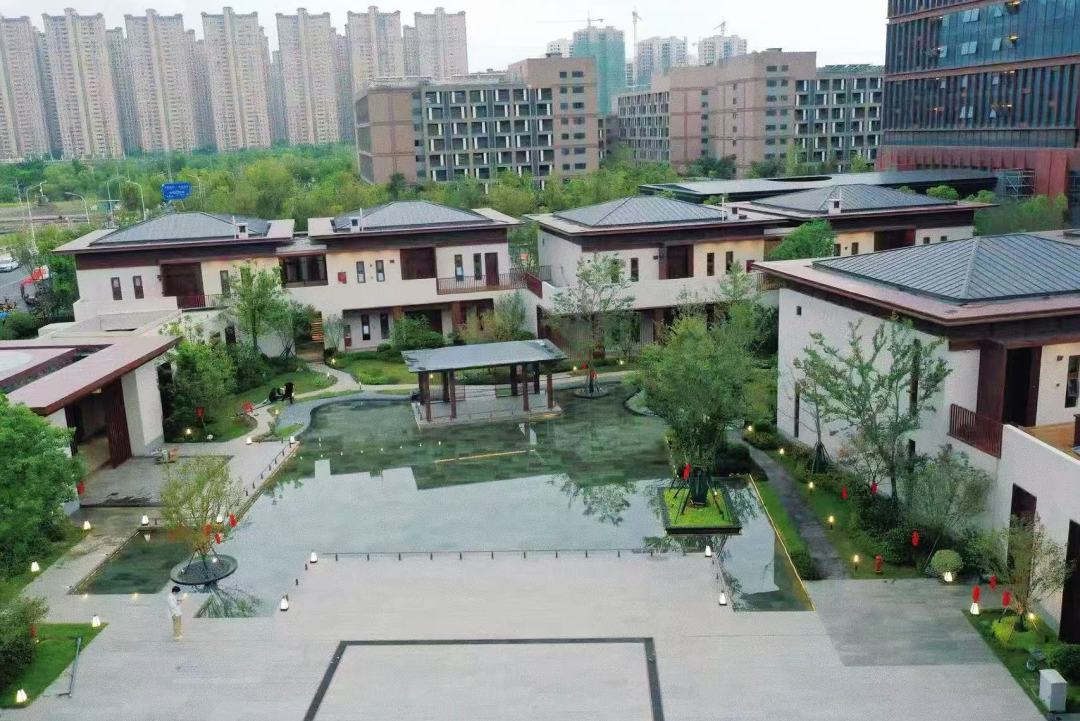
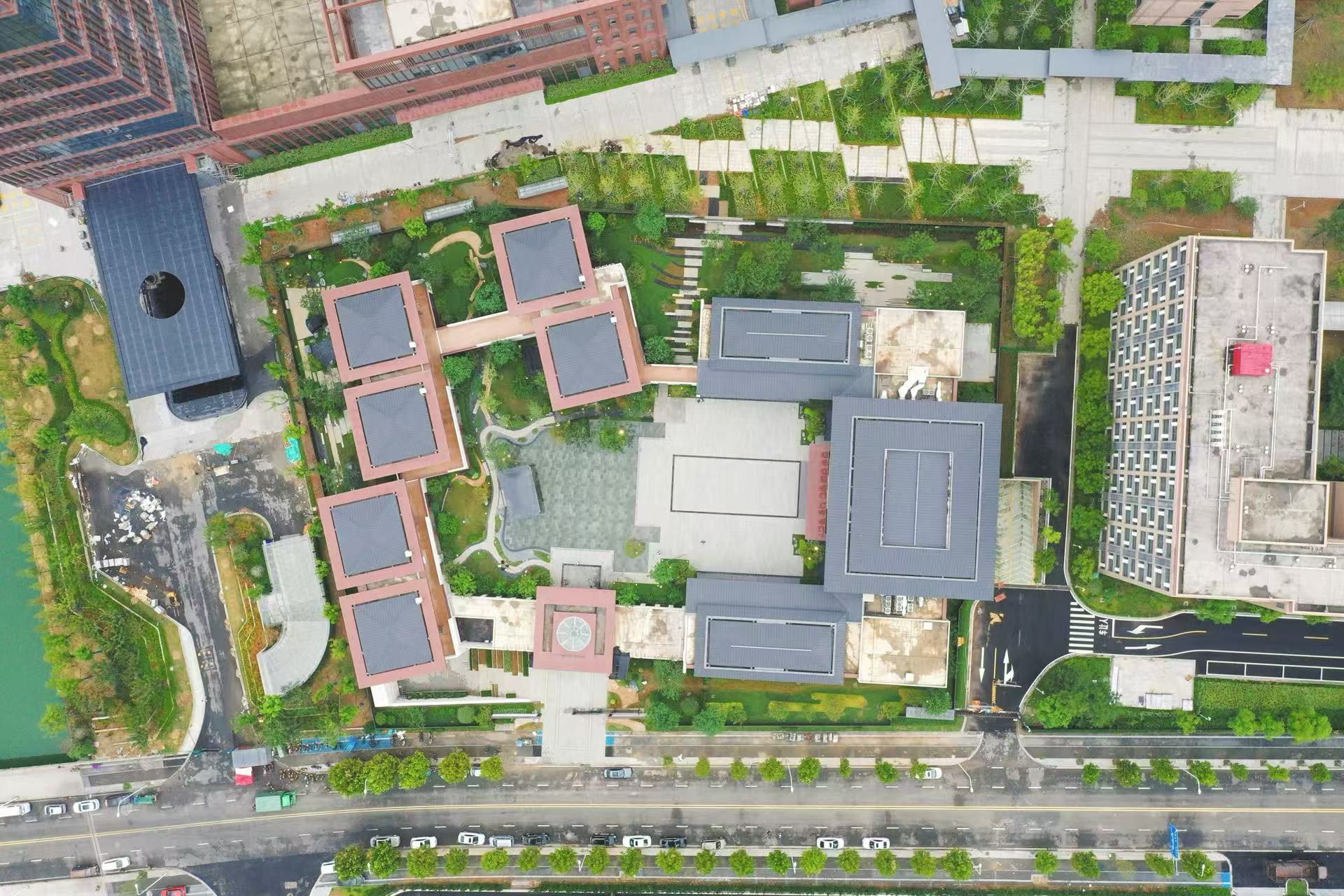
▲鸟瞰图
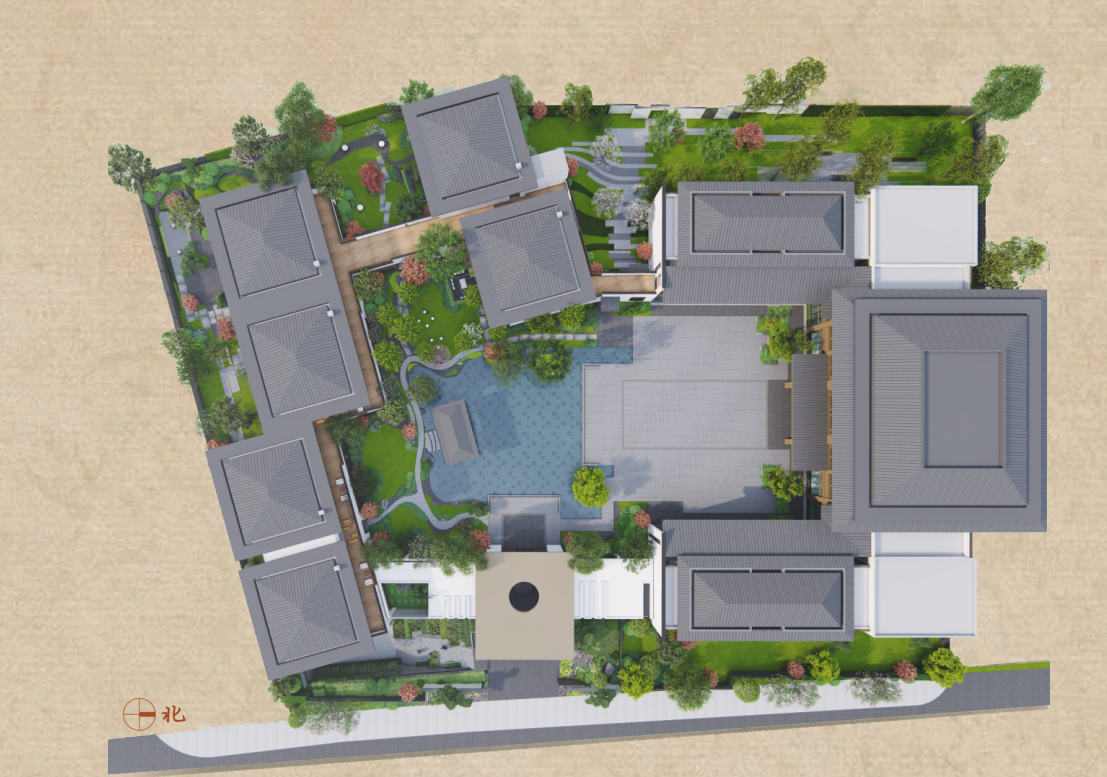
▲平面效果图
整个设计以水为脉,庭院环绕,借助水景营造自然消隐的和谐关系,筑山、置石、花鸟、建筑巧妙地融为一体,将建筑的自然属性最大化,让设计回归到自然、纯朴的艺术意境。
The entire design is centered around water, with the courtyard encircling it. Using water features, it creates a harmonious relationship that subtly blends into nature. By incorporating mountains, stones, flowers, birds, and architecture seamlessly, the design maximizes the natural qualities of the buildings, allowing the design to return to a natural and simple artistic realm.
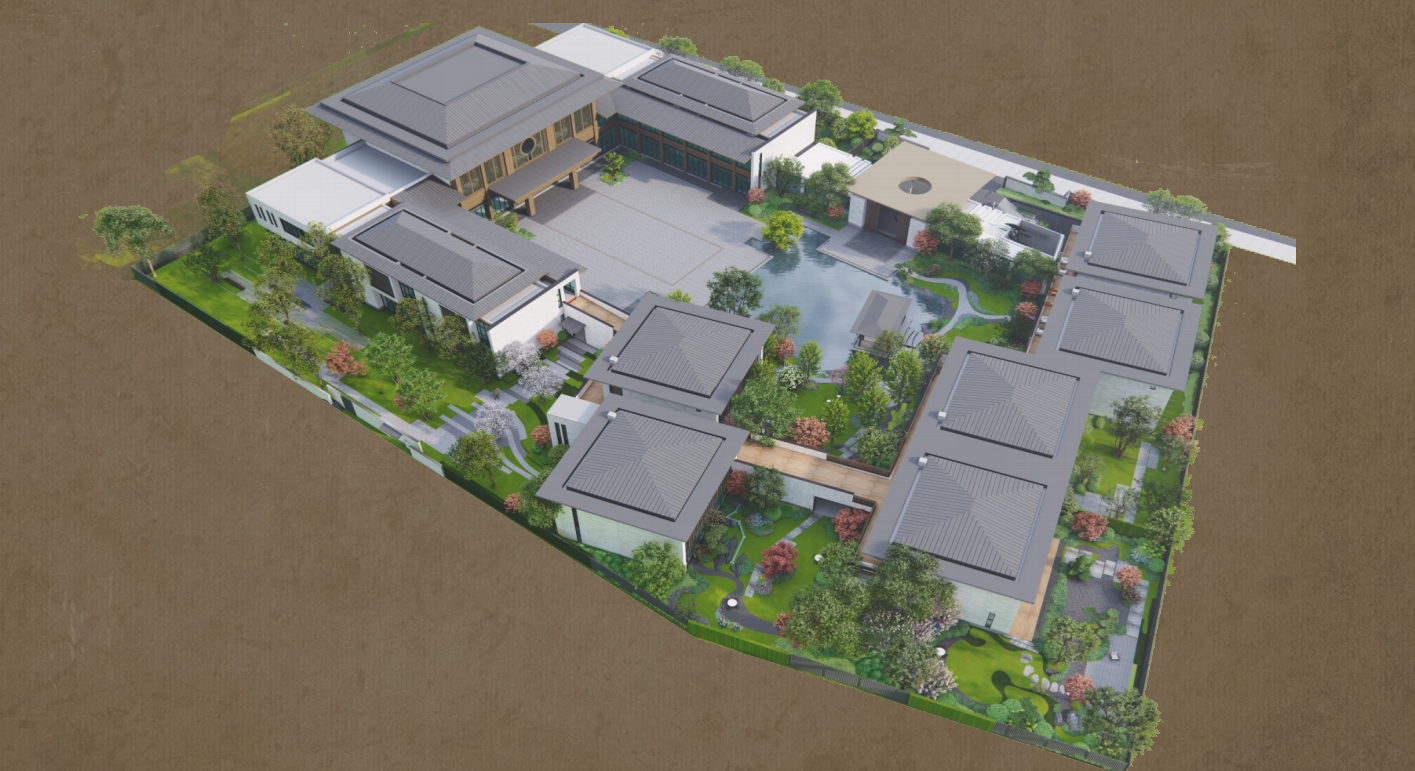
书院设计定位|Academy Design Positioning
方太书院本就以儒家文化为企业根基,而传统书院的核心礼制就是“畔水绕院”——古代书院常设半圆形畔池象征“学海无涯”礼制秩序。水院为核传承这一文脉,让书院从诞生之初自带“传道授业”的文化正统性。
一个展示“中华文化”企业管理哲学的方太儒学基地
一个容纳员工自我提升心性能量,心灵品质及心中宝藏的方太家园
一个集展览,教育培训,文化交流多功能于一体的方太研学大本营
1.Fotile Confucianism Base: Exhibiting Chinese Cultural Business Management Philosophy
2.Fotile Homeland: Nurturing Employees' Mental Vitality, Spiritual Attainments & Inner Treasures for Self-Growth
3.Fotile Research & Study Hub: A Multi-Functional Hub for Exhibition, Education, Training & Cultural Exchange
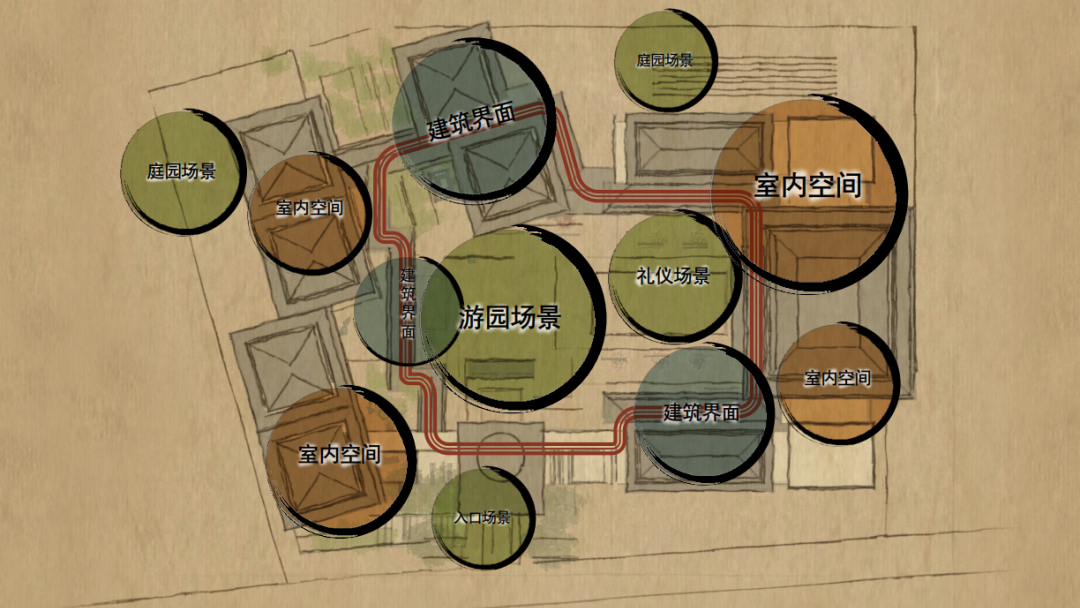
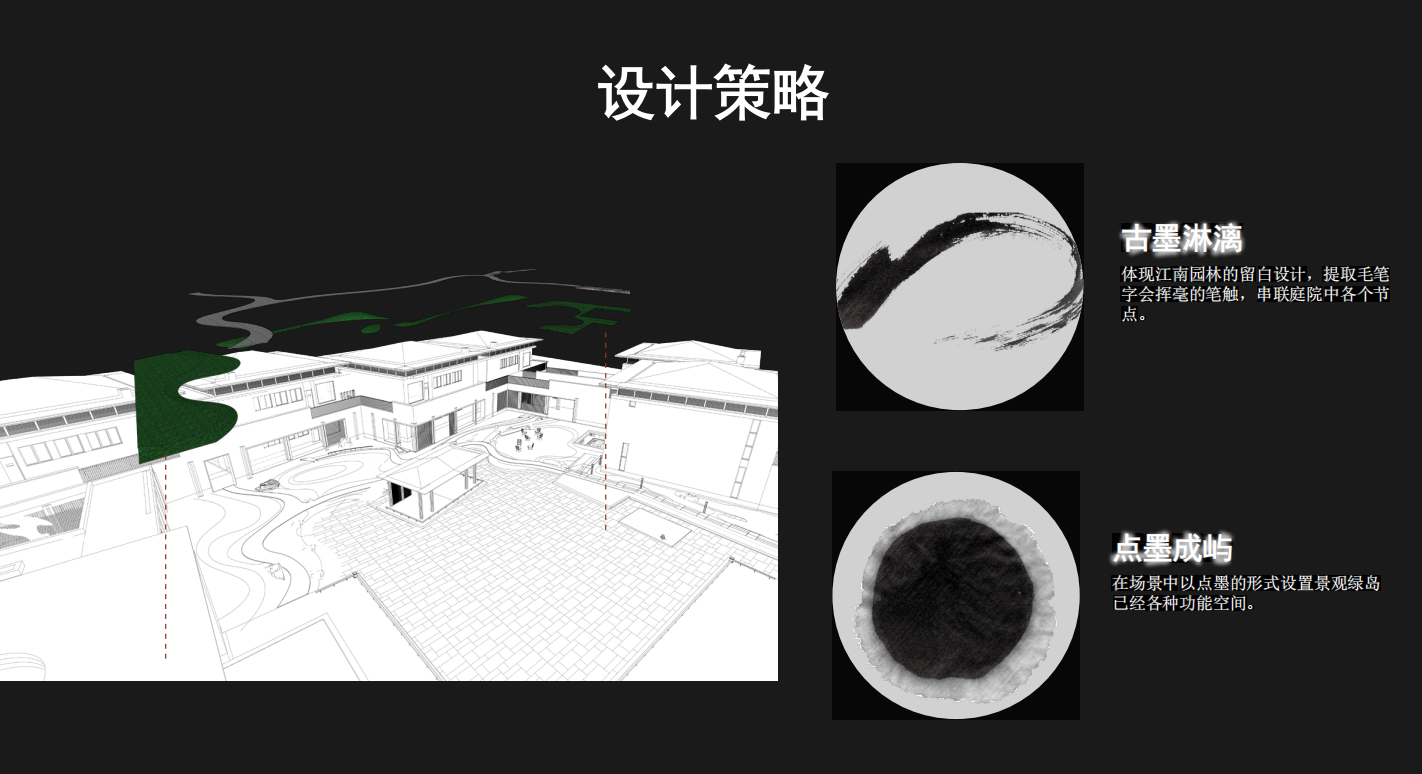
设计策略|Design Strategy
1.古墨淋漓
体现江南园林的留白设计,提取毛笔字会挥毫的笔触,串联庭院中之内,建筑,室内,景观,庭院各个节点
2.点墨成屿
在场景中以点墨的形式设置景观绿岛以及各种空间功能
Ancient Ink Flowing
Reflects the use of negative space design in Jiangnan gardens, drawing on the brush strokes of calligraphy to connect various points within the courtyard.
Ink Dots Form Islands
In the scene, set up landscape green islands and various spatial functions in the form of ink dots.
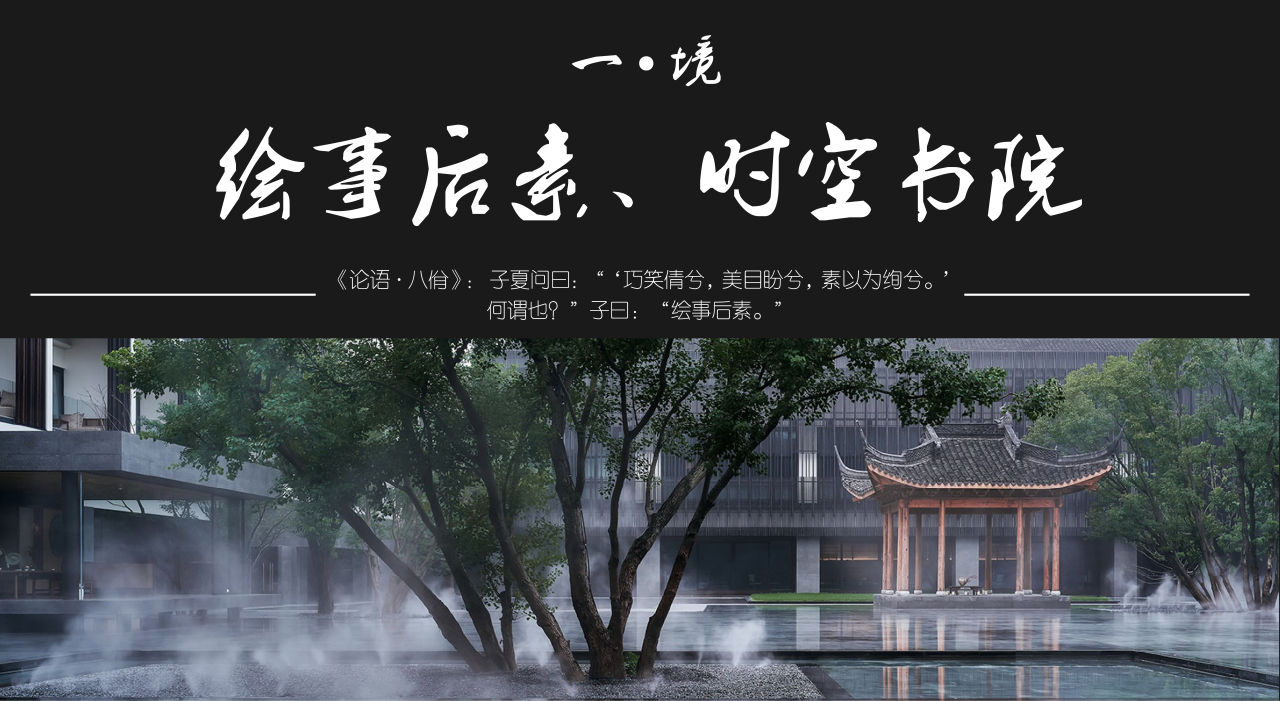
景观设计贴合建筑风格,做到建筑-室内-景观一体化。
The landscape design aligns with the architectural style, achieving integration between architecture and landscape.
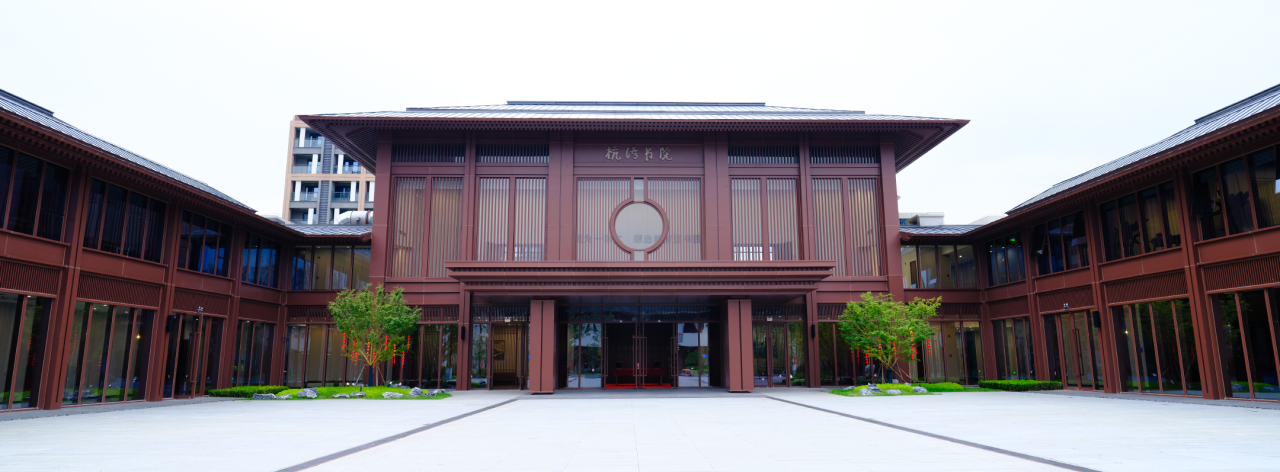
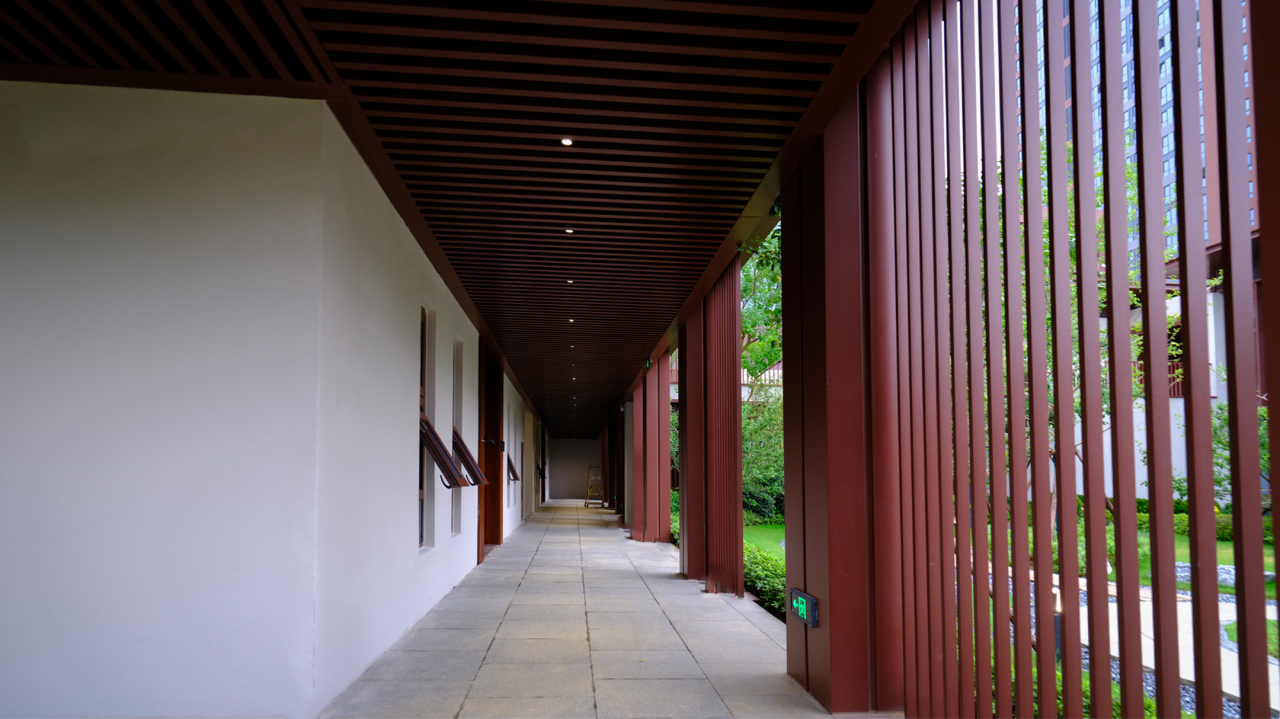
中式建筑风格,它以东方传统建筑美学为底蕴,融入现代设计语言,既保留了中式空间的雅致内敛与文化意境,又通过简洁的现代手法,让建筑兼具传统韵味与当代实用质感,呈现出富有东方气质的现代建筑风貌。
New Chinese-style architecture draws on oriental traditional aesthetics, integrates modern design, combines traditional charm with contemporary functionality, and showcases a modern style with distinct oriental elegance.
02.
入口门厅
Entrance Hall
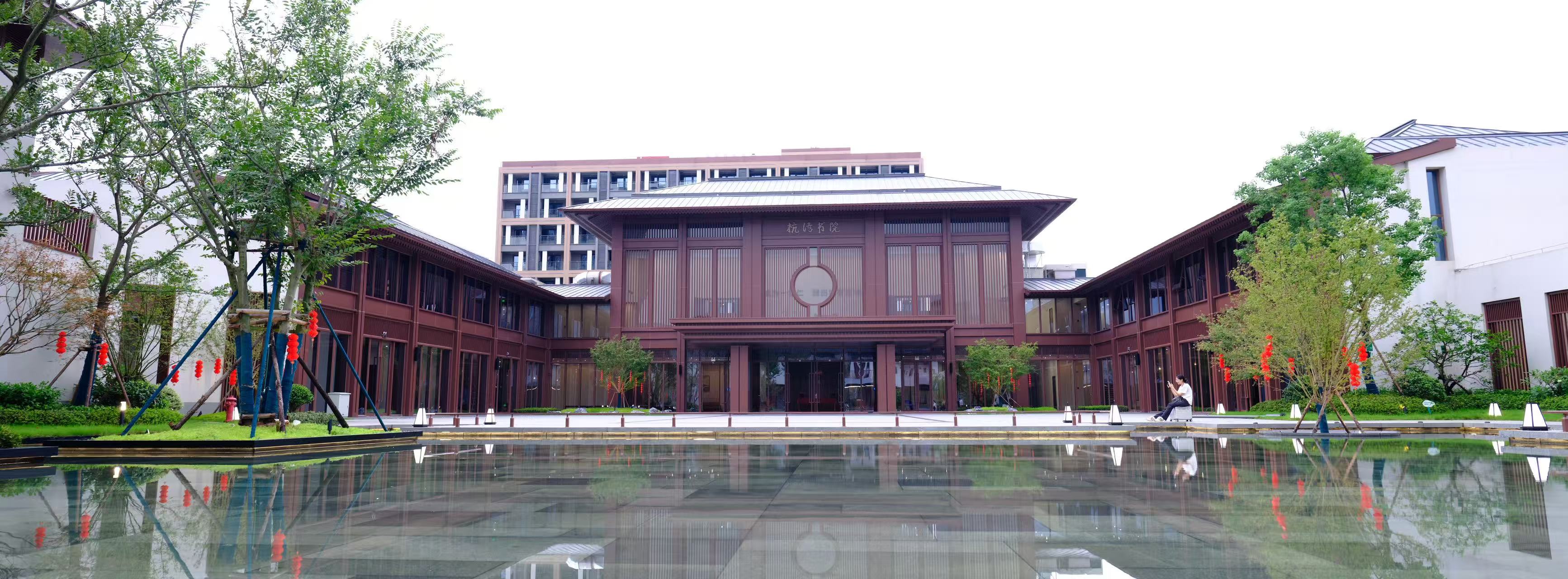
以 “当代中式・入境即静” 为核心方向 —— 门头作为项目的 “第一界面”,需同时承担「身份标识」「空间过渡」「气质铺垫」三重功能,设计不仅平衡 “传统精神的当代表达” 又兼顾 “现代场所的实用需求”。
Core direction: "Contemporary Chinese Style · Immediate Tranquility upon Entry"The entrance (the project’s "first interface") serves 3 functions: identity recognition, spatial transition, atmospheric preparation.Its design balances traditional spirit’s contemporary expression and modern space’s practical needs.
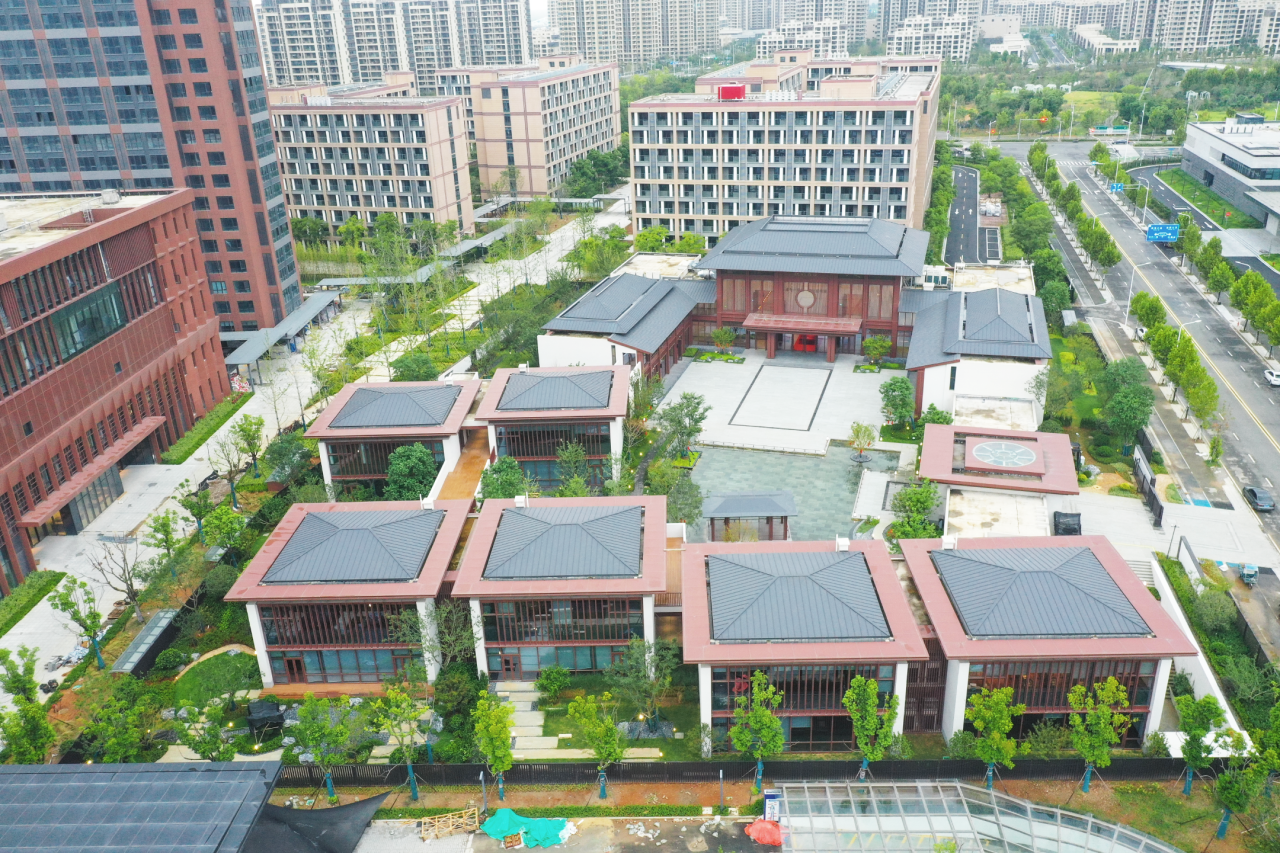
▲书院鸟瞰图
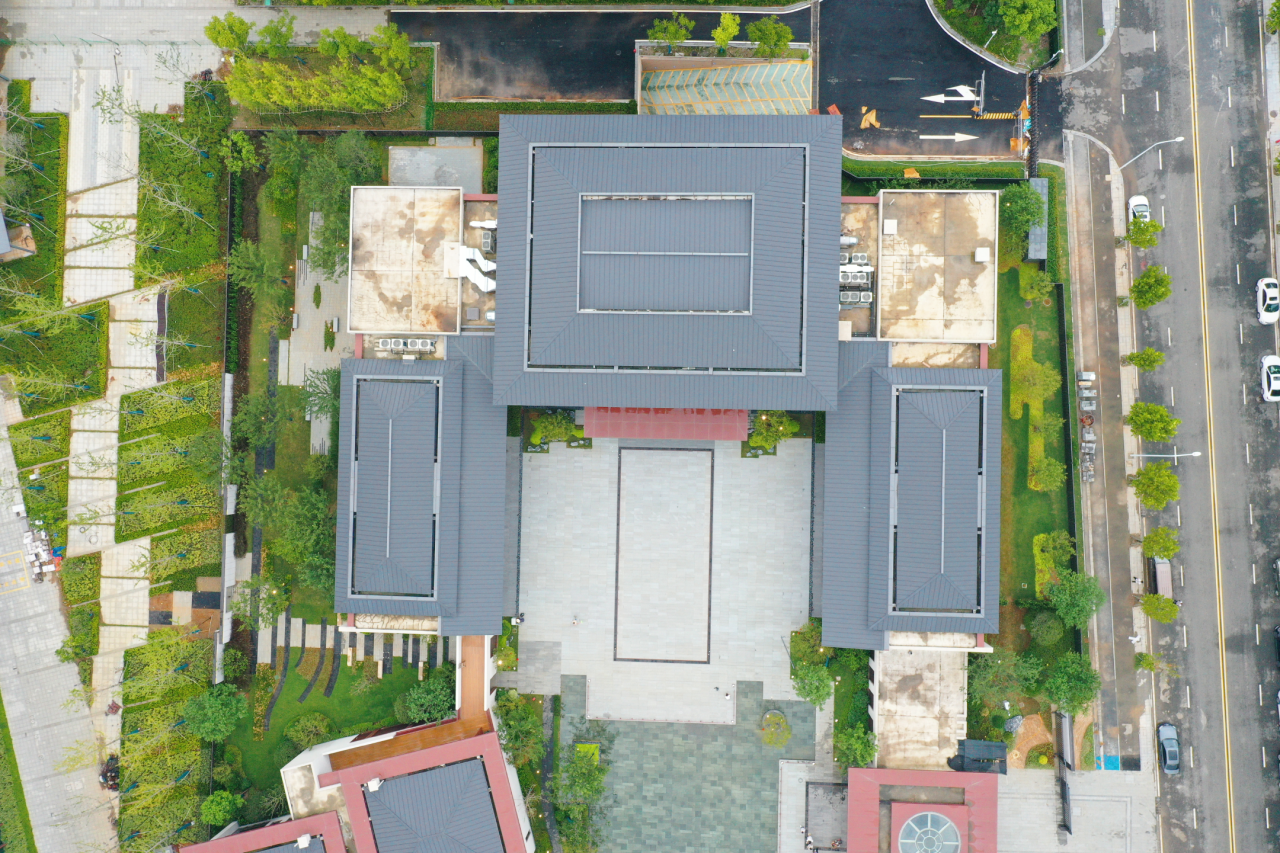
▲入口平面图
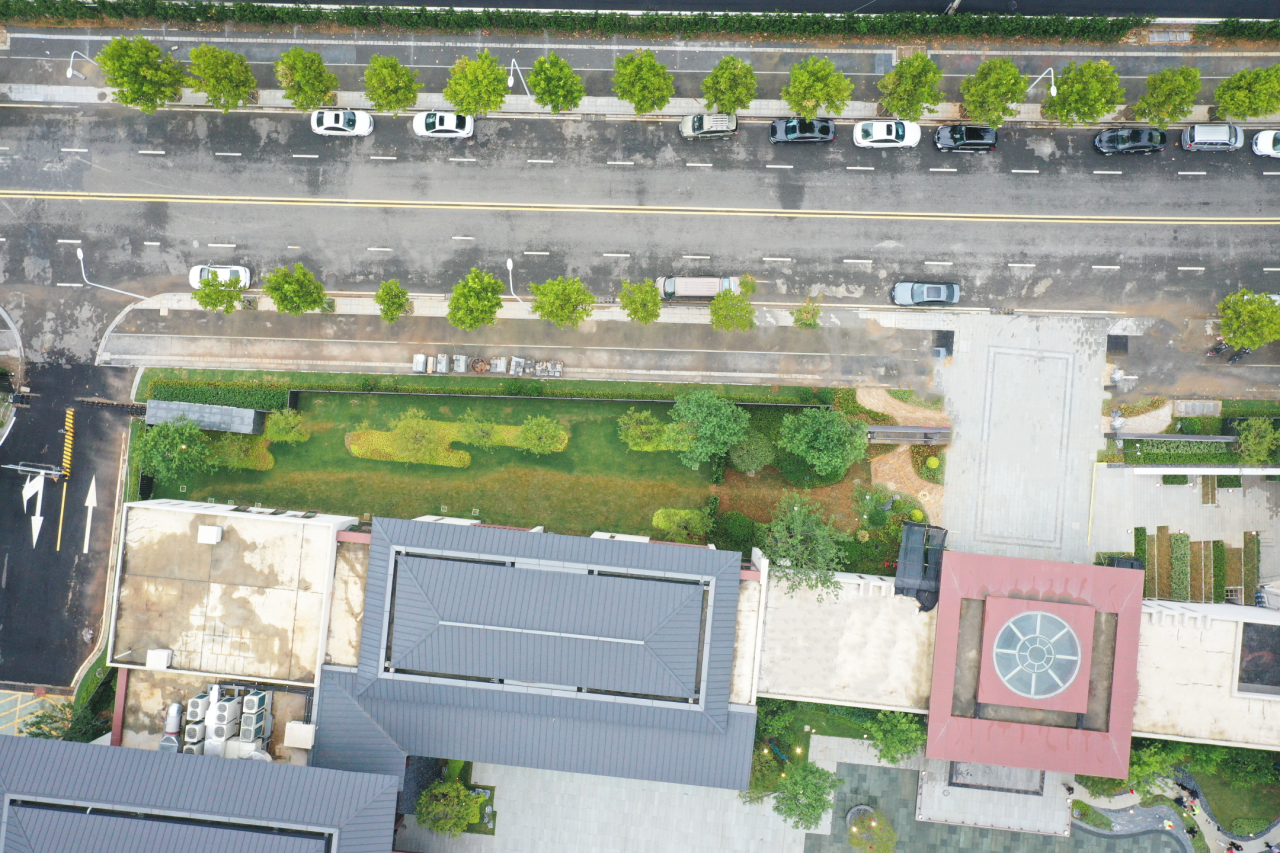
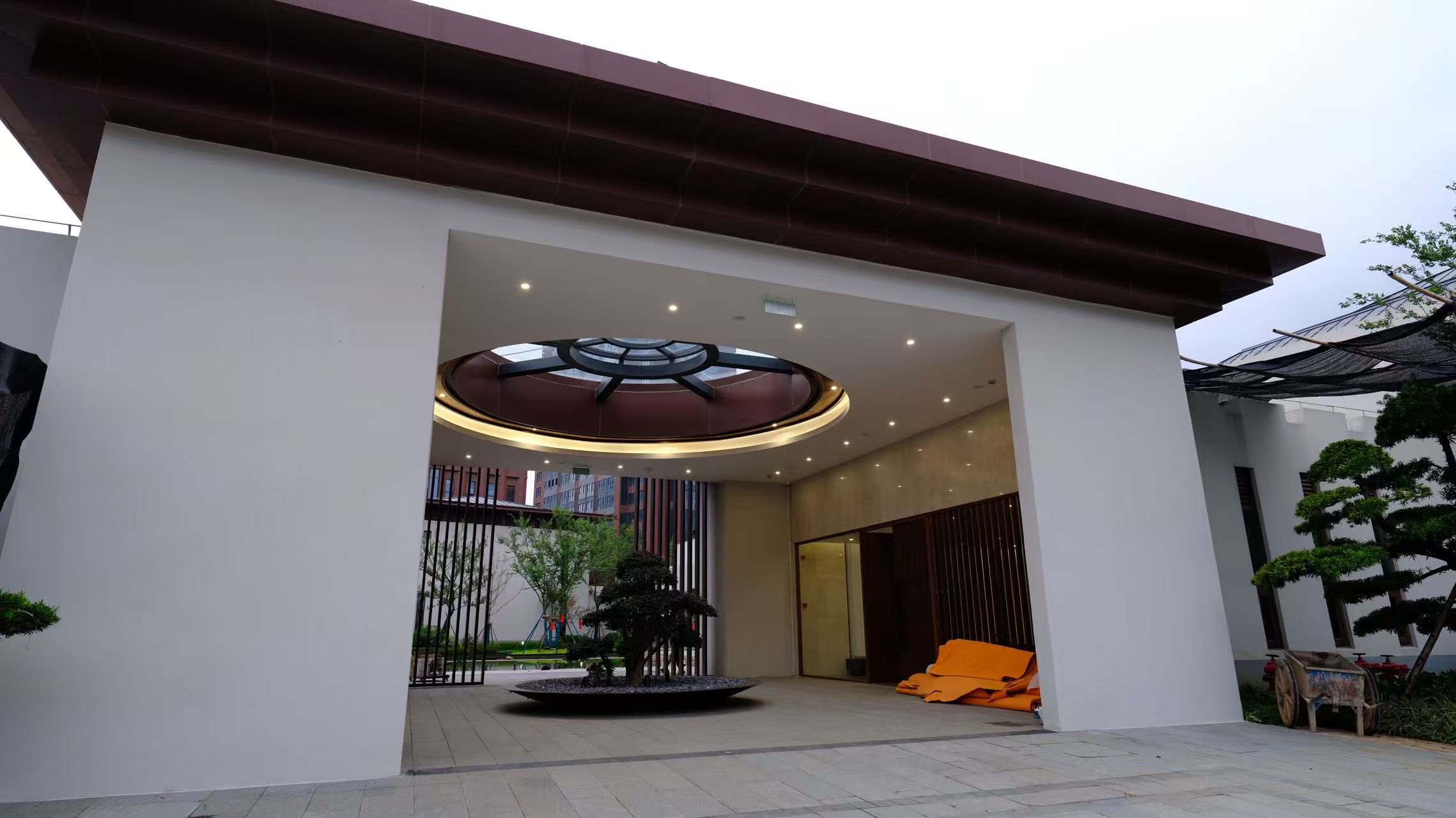
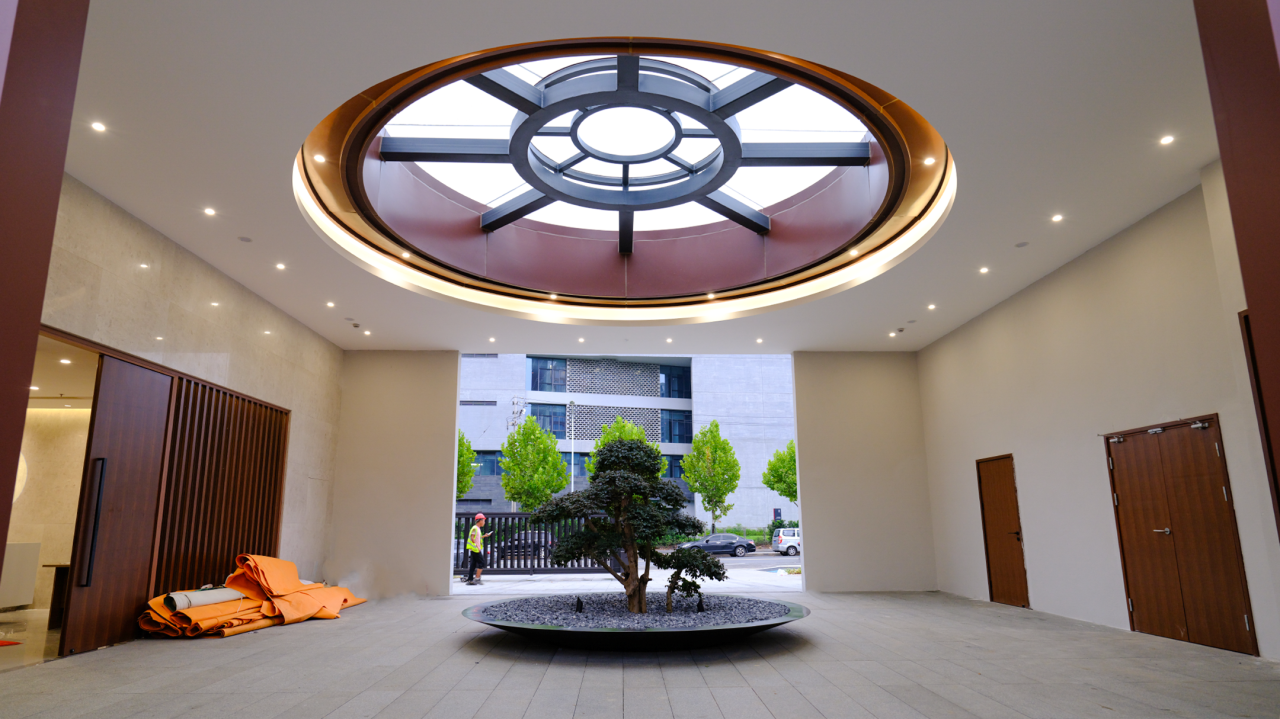
▲入口门厅
罗汉松作为视觉焦点位于空间正中央,搭配圆形石材基座,成为第一眼就能抓住视线的视觉锚点,直打破了大尺度空间的空旷感,让人流自然在此停留、聚焦。
The Podocarpus macrophyllus, centered in the space as a visual focal point and paired with a circular stone base, acts as an immediate visual anchor—breaking the emptiness of the large-scale space and naturally drawing people to pause and focus.
传统中式门头常以繁复形制体现礼序,但当代项目更需要 “松弛的仪式感”—— 既要有入口的尊贵标识性,又不能让访客感到压抑、厚重。
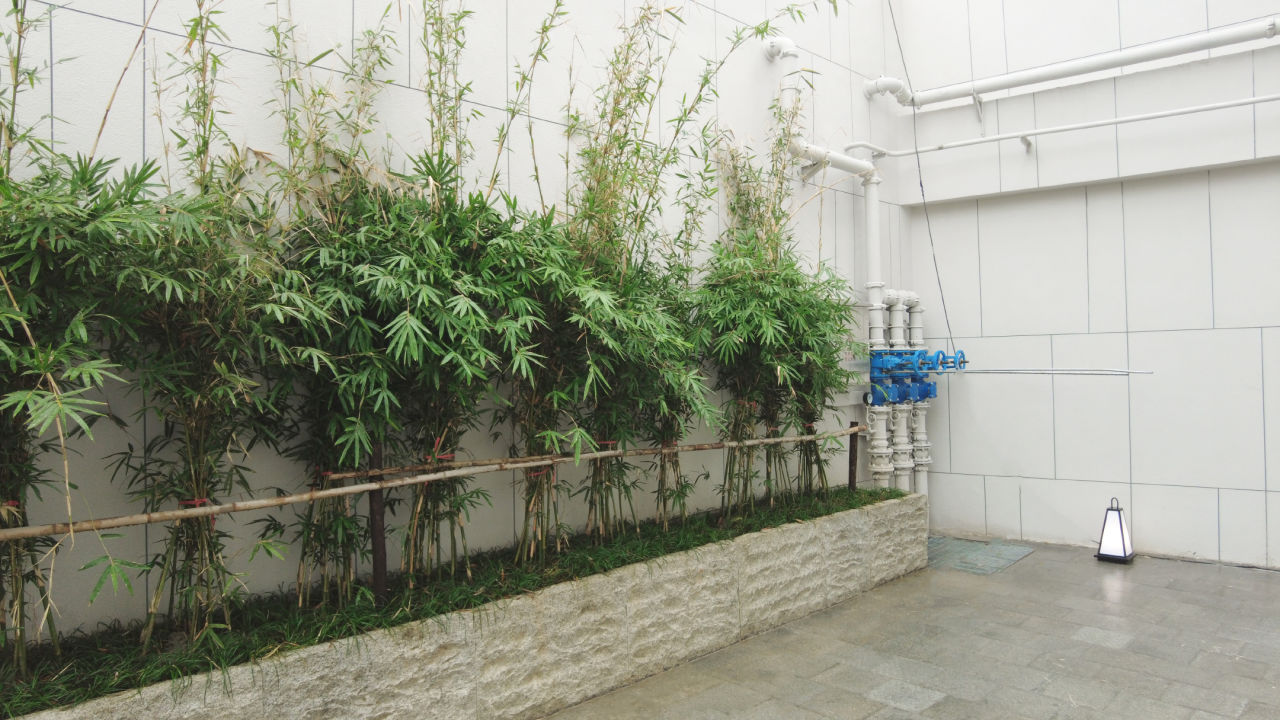
Tranquil bamboo groves, dancing sparse shadows cast on the wall. Explore the Oriental elegance in leisure, and it all unfolds gently here.
于是采用对称式基础布局,但弱化传统木构的复杂装饰,以 “水平延展的简洁体量 + 利落的几何线条” 构建门头形态;通过比例传递 “低调尊贵” 的礼序,适配当代场所的审美节奏。
Symmetric base layout, toning down ornate traditional woodwork; shape the entrance with a sleek horizontal volume + crisp geometric lines. Convey understated elegance via proportions, aligning with modern aesthetic rhythms.
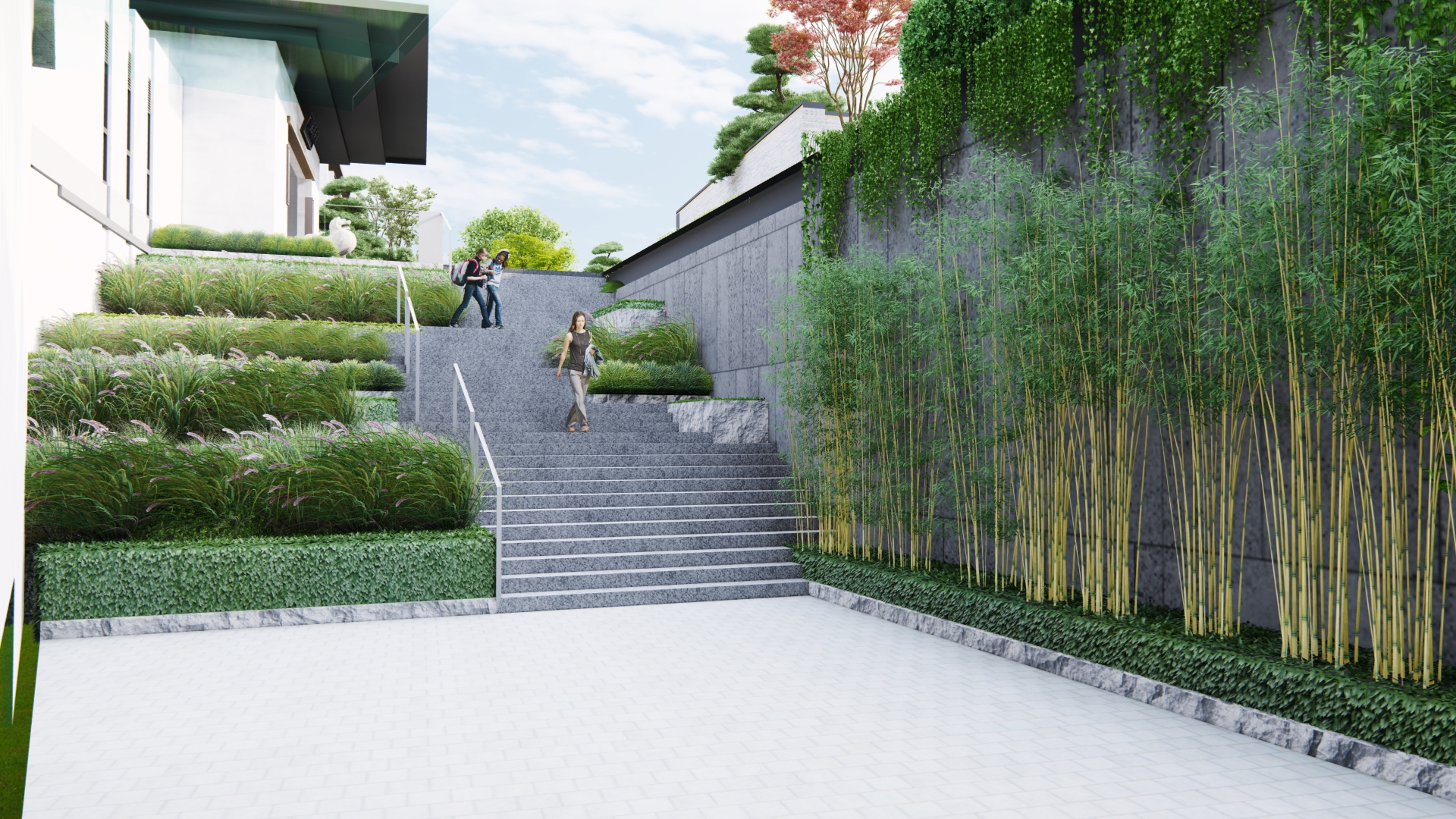
清幽竹林,婆娑的树影印在墙上,于舒适中探寻东方雅韵,就此徐徐展开。
In the serene bamboo forest, the swaying shadows of the trees are cast on the walls, gently unfolding the elegance of the East in comfort.
03.
庭院深深
Deep Courtyard
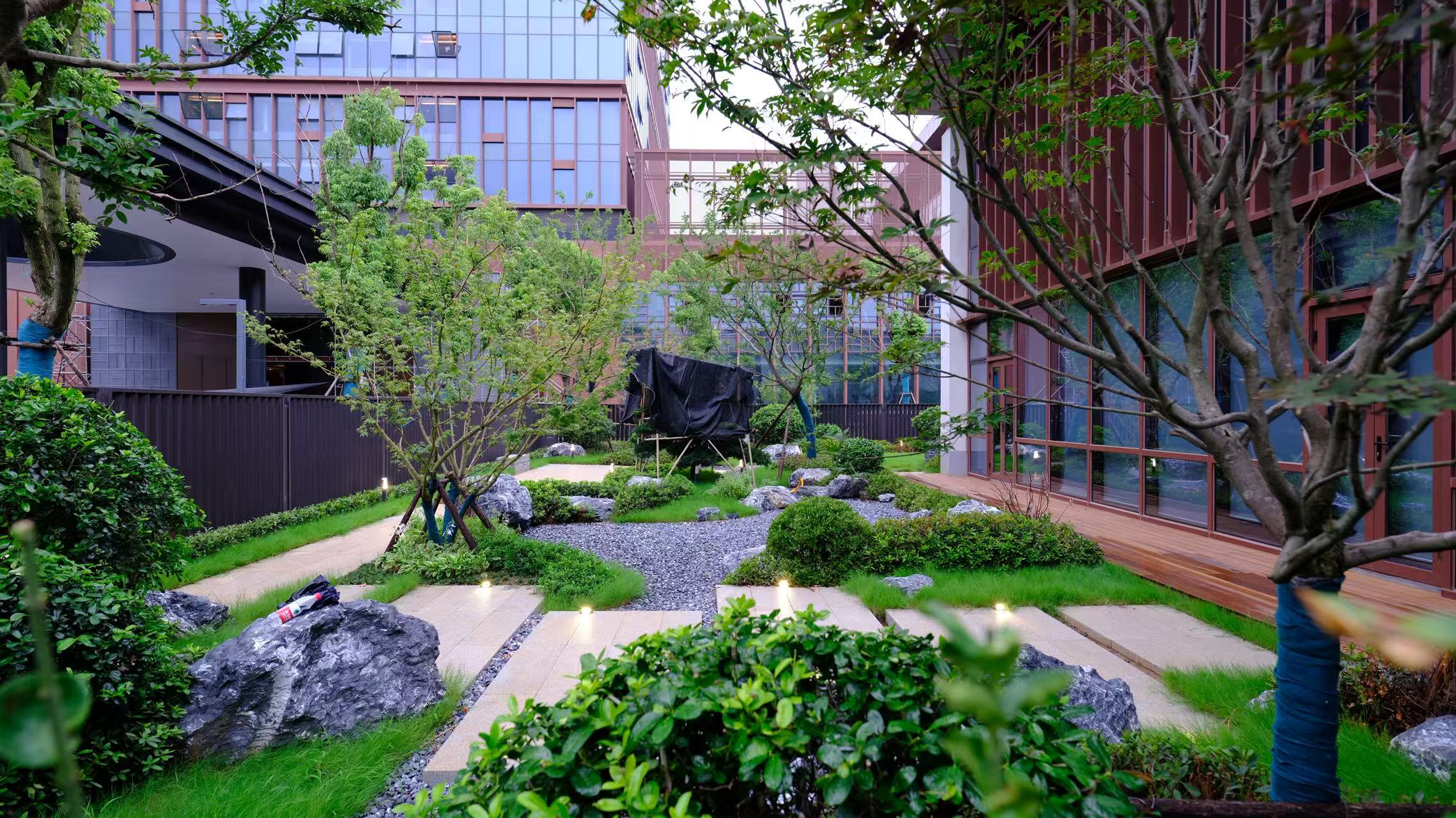
通过层层递进的空间关系、蜿蜒掩映的路径与精心框取的光影,将有限的园地营造成视觉与心境上无限延伸的“深境”。不追求一目了然,而珍视步移景异、心境渐宁的抵达过程。
Layered walls, winding shaded paths and framed light & shadow turn a small garden into an infinitely extended "deep realm" for sight and soul. Reject instant clarity; cherish the journey of changing views and calming mind.
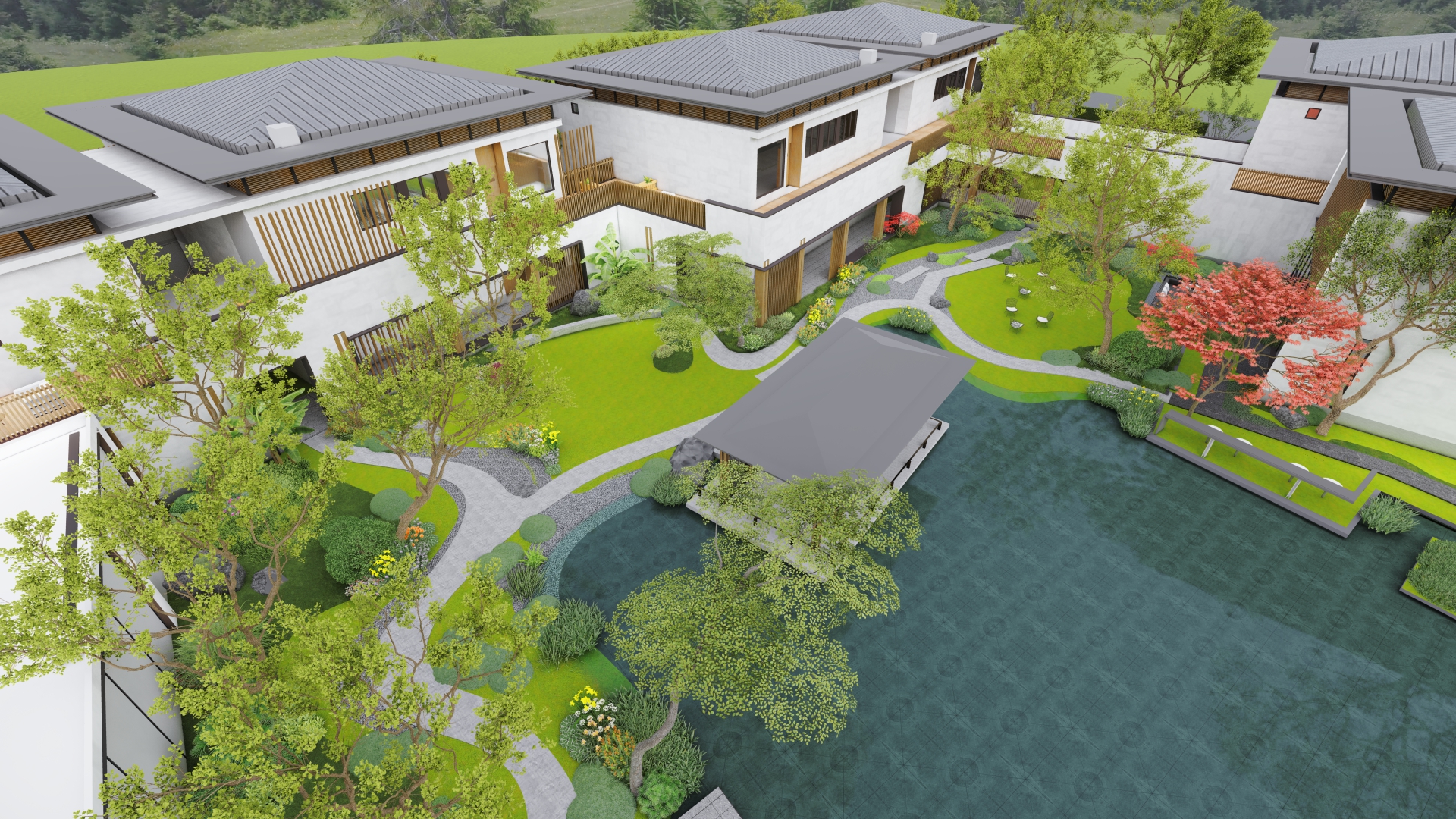
▲南侧中庭(古墨淋漓)
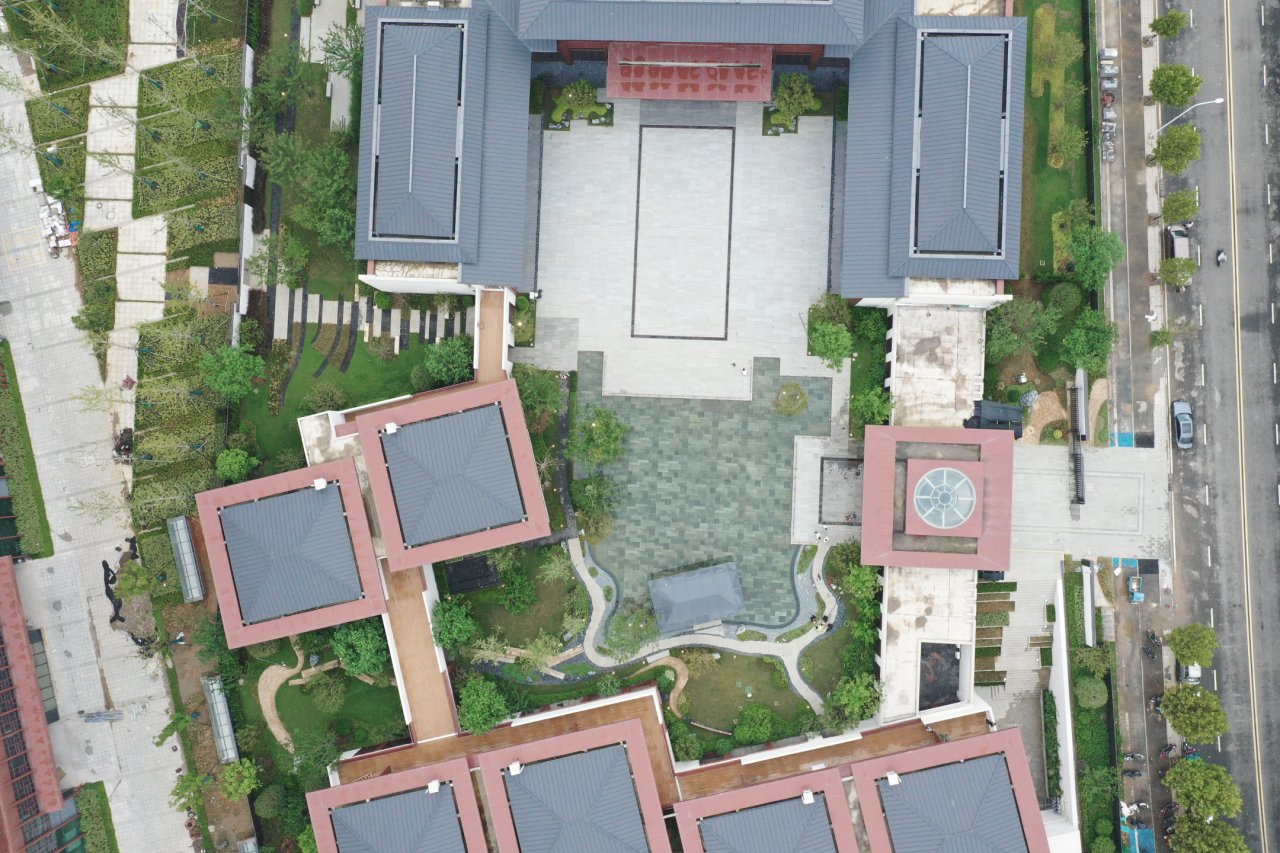
▲中央水景平面图
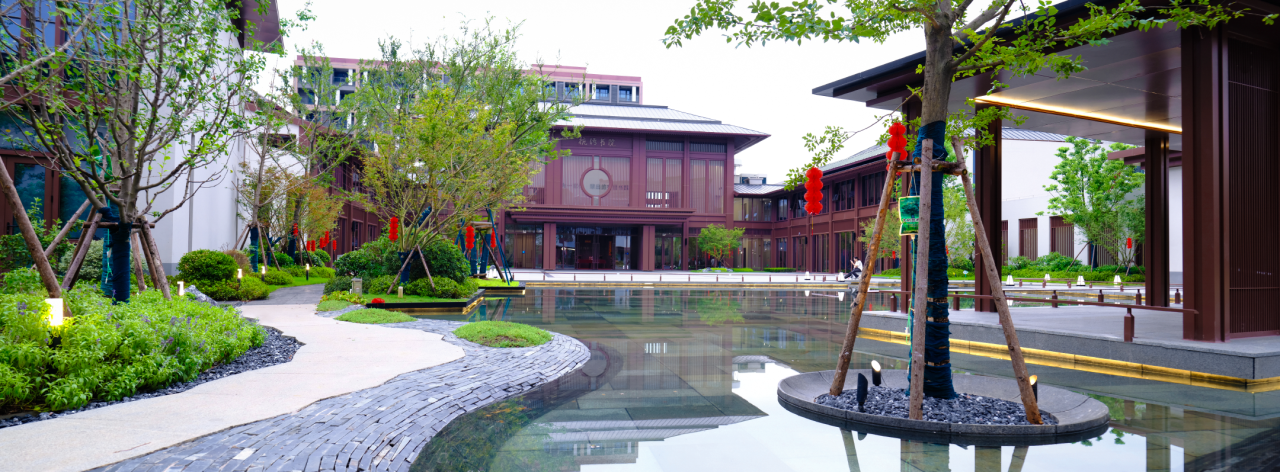
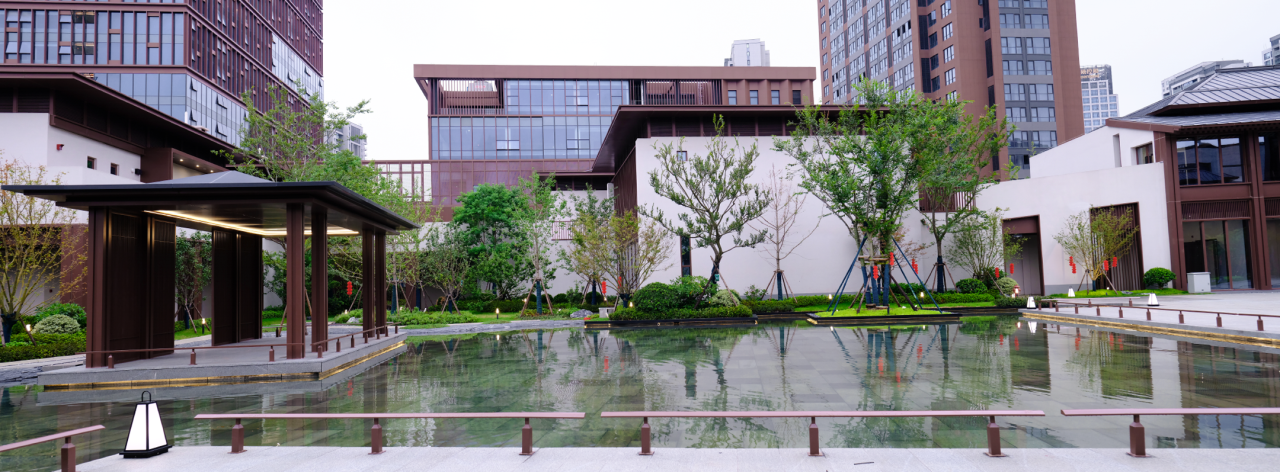
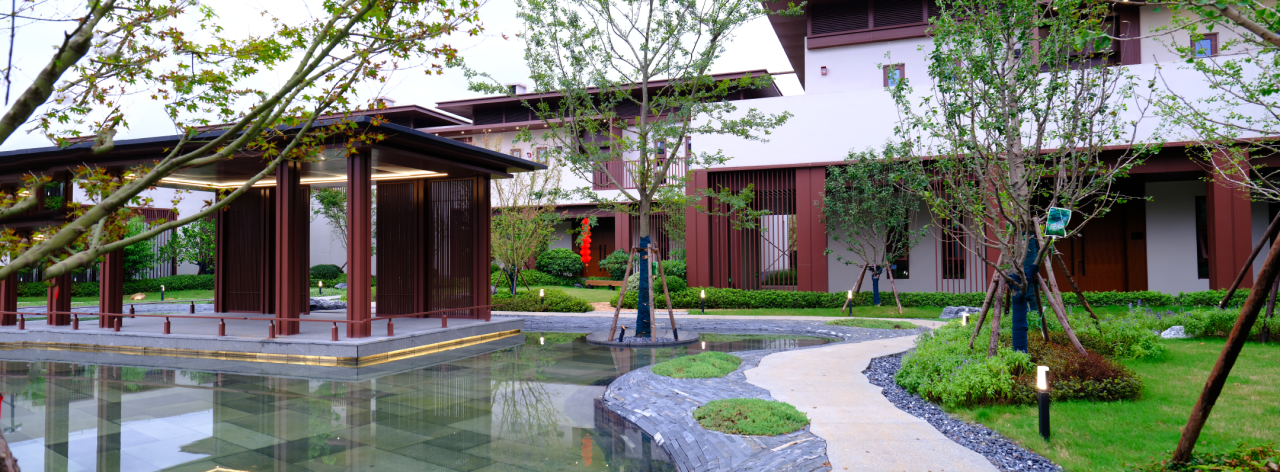
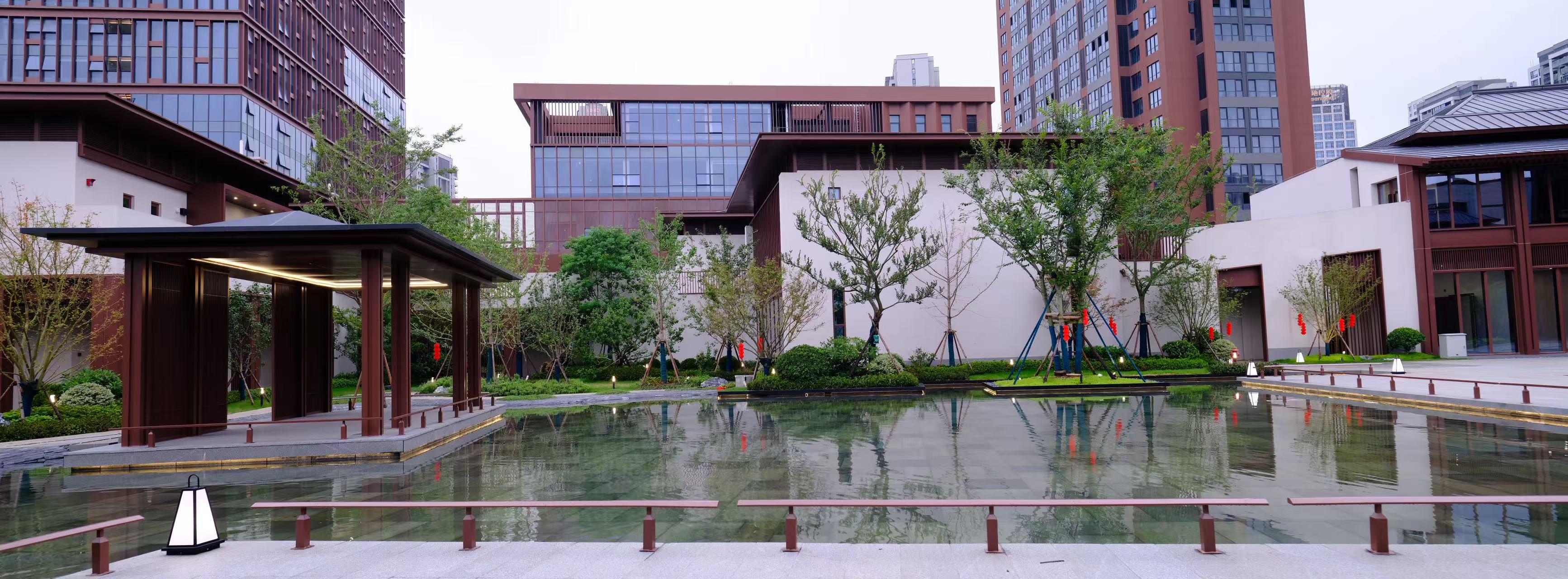
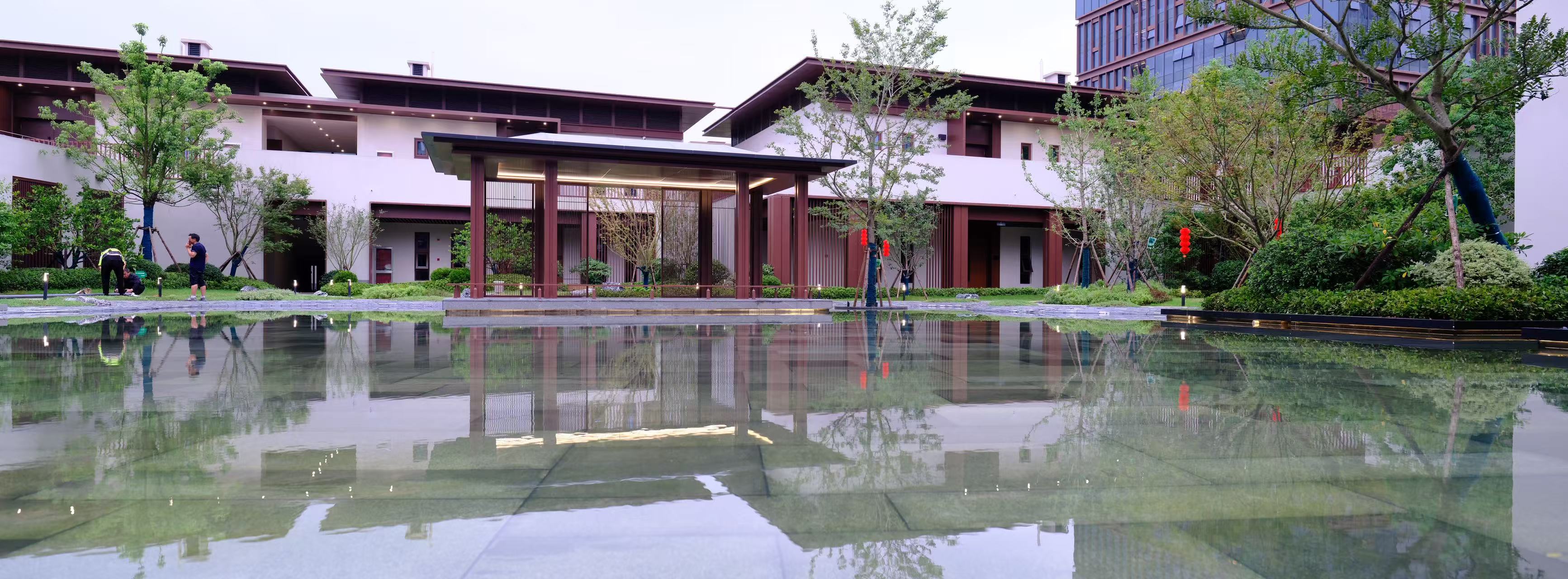
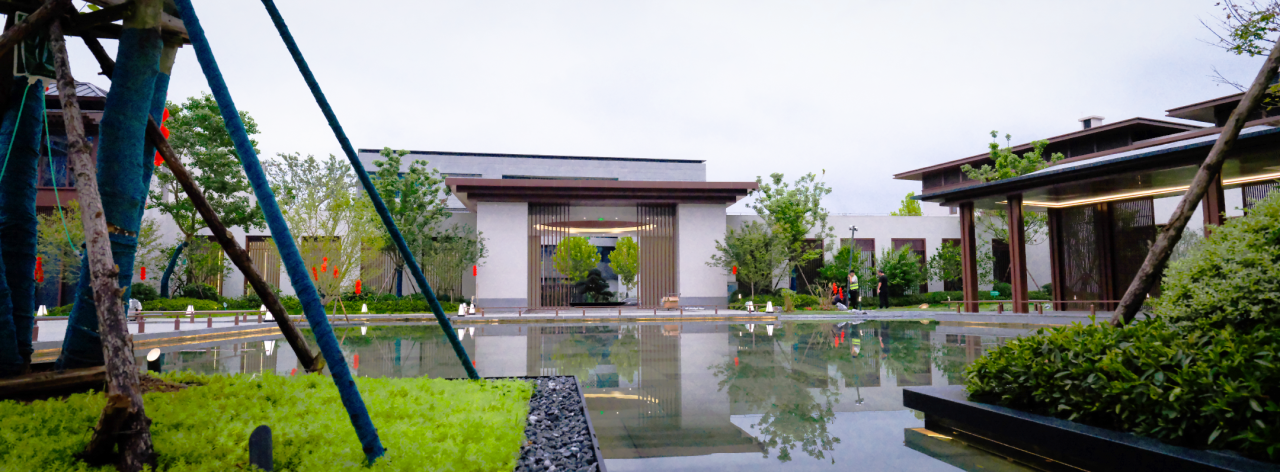
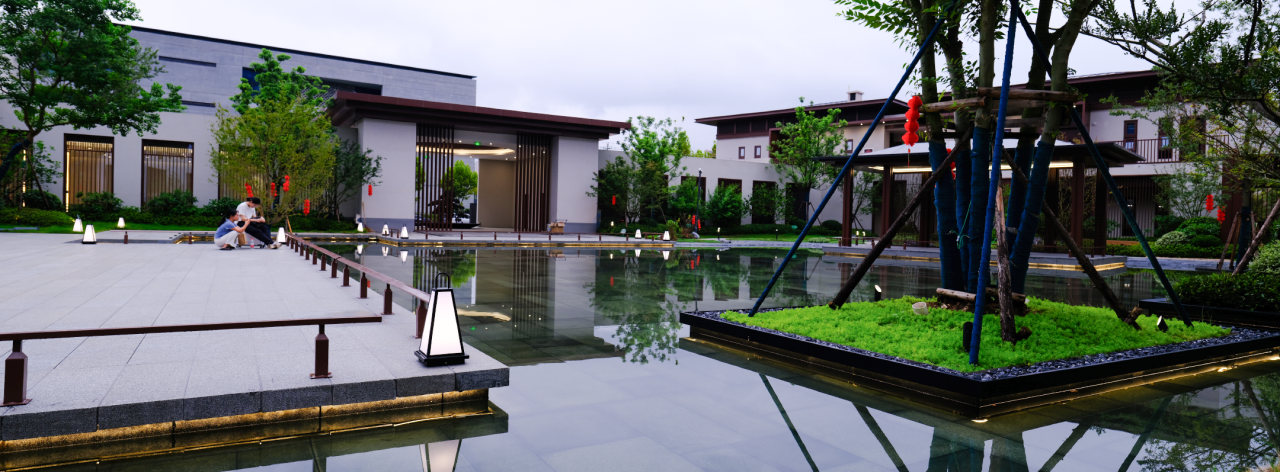
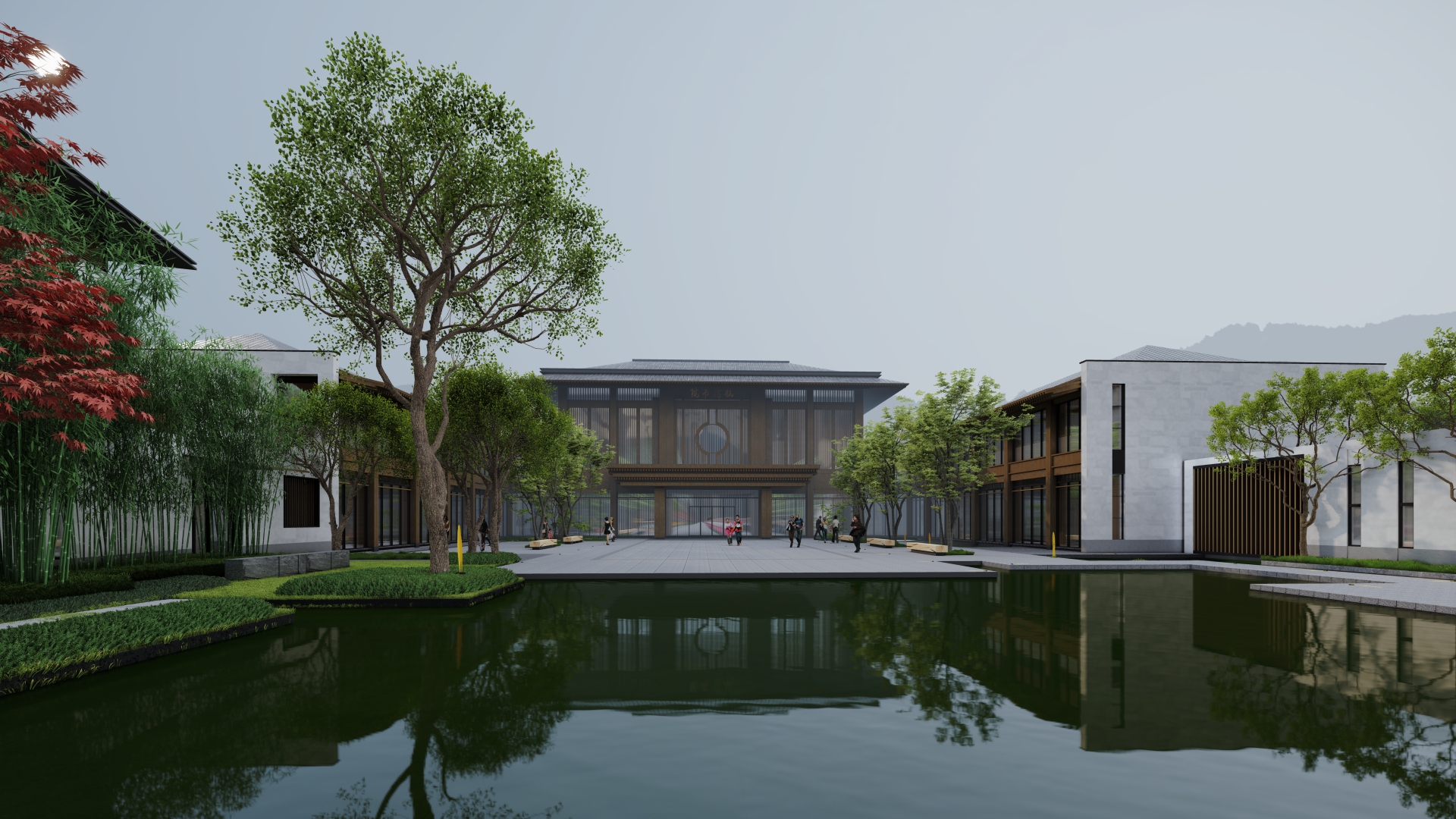
开阔的镜面水景区是视觉重心,柔化了建筑的规整感;近岸的水榭依水而建,和岸边的绿植、红枫相映抒发闲静的东方意趣
The expansive mirror-like water landscape serves as the visual focal point, softening the rigidity of the architecture; the waterside pavilions near the shore are built along the water, harmonizing with the greenery and red maples on the banks to convey a tranquil Oriental charm.
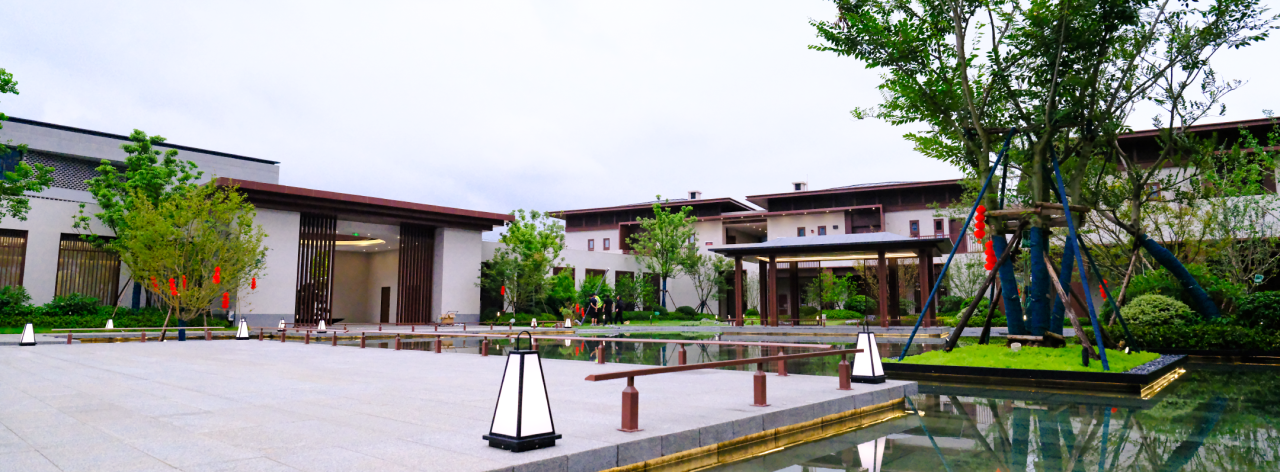
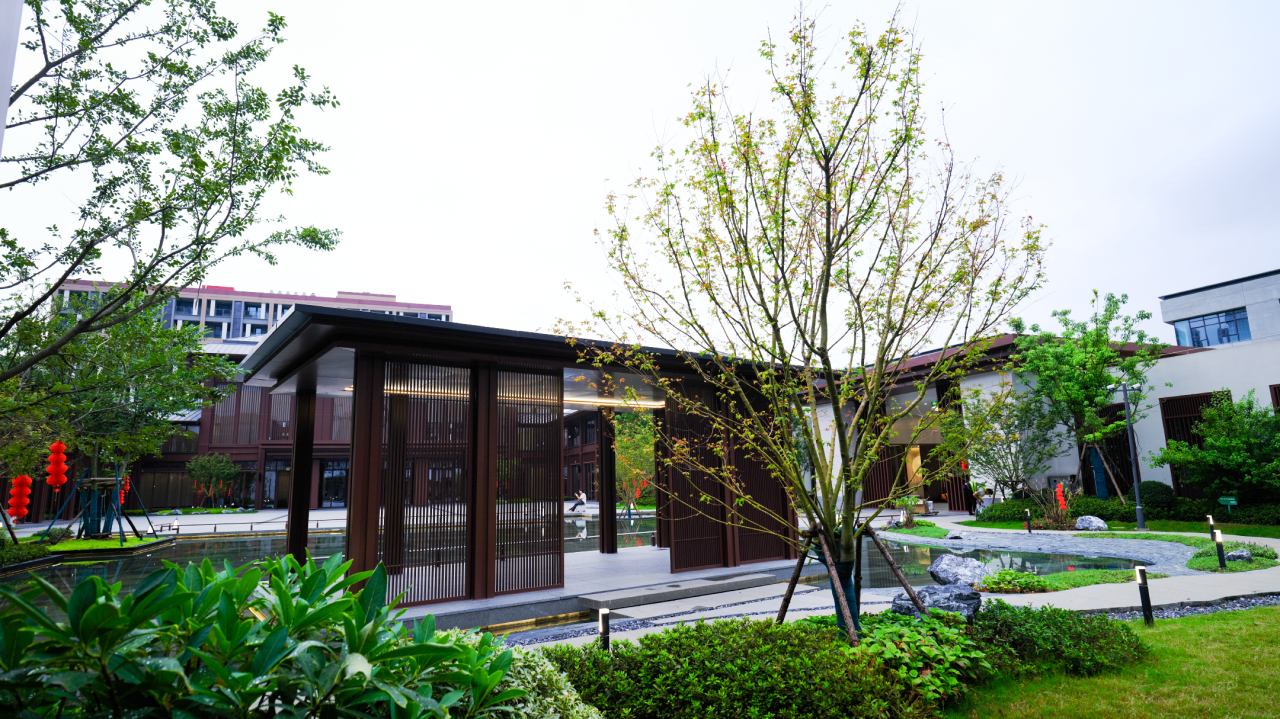
格栅的通透感让亭子既不遮挡景观,又能通过光影变化营造静谧的空间氛围;其简化的中式元素(如对称布局、格栅肌理),延续了传统园林 “亭榭赏景” 的文化基因,让现代庭院兼具功能性与东方意境。
The grilles' transparency keeps the pavilion unobtrusive to views, while shifting light and shadow creates a tranquil atmosphere. Its simplified Chinese elements—such as symmetrical layout and grille texture—carry forward the traditional garden culture of "viewing scenery from pavilions," blending functionality with Eastern artistic charm in the modern courtyard.
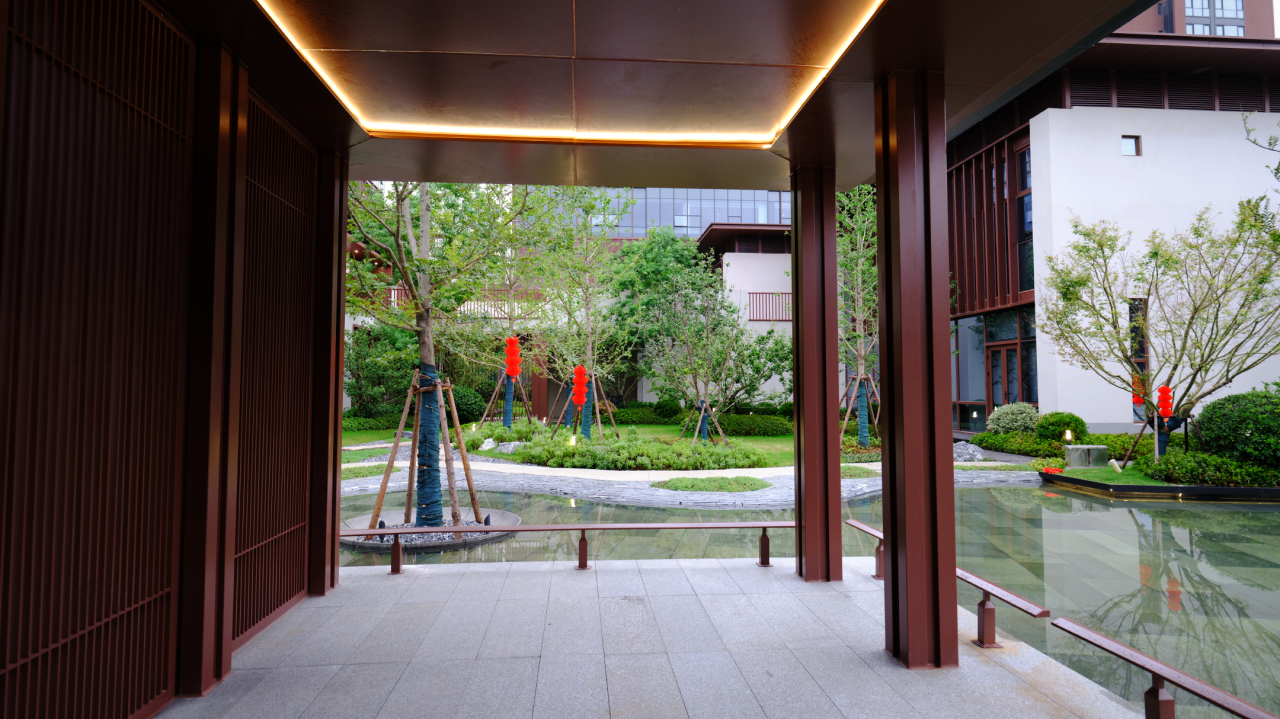
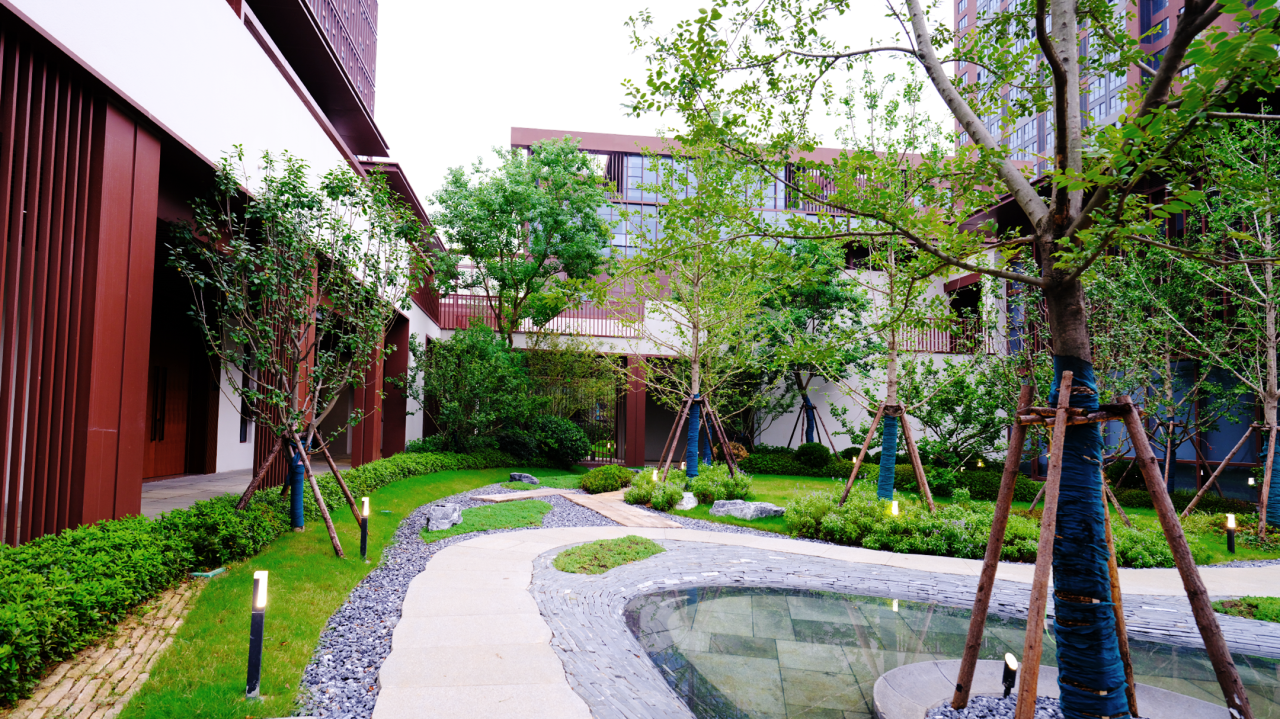
“藏 - 露 - 延” 的序列逻辑塑造空间节奏:入口以连廊、局部景墙形成遮挡,先呈现窄幅水景与置石;行进间逐步展开开阔草坪;借助湖面倒影将视线延伸至建筑与远景植被。
Design shapes spatial rhythm via the "conceal-reveal-extend" sequence:At the entrance: Corridors & partial walls block the view, first showing narrow waterscapes and rockery.While moving: An open lawn gradually unfolds.Via lake reflections.
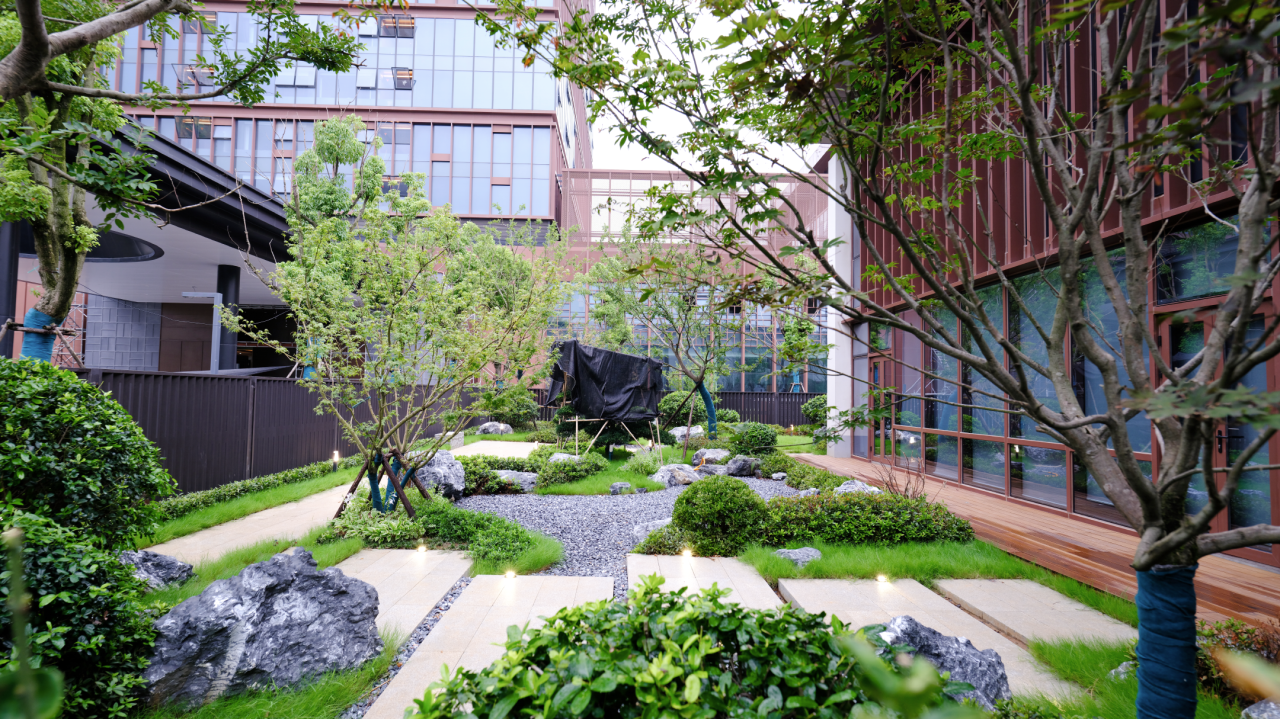
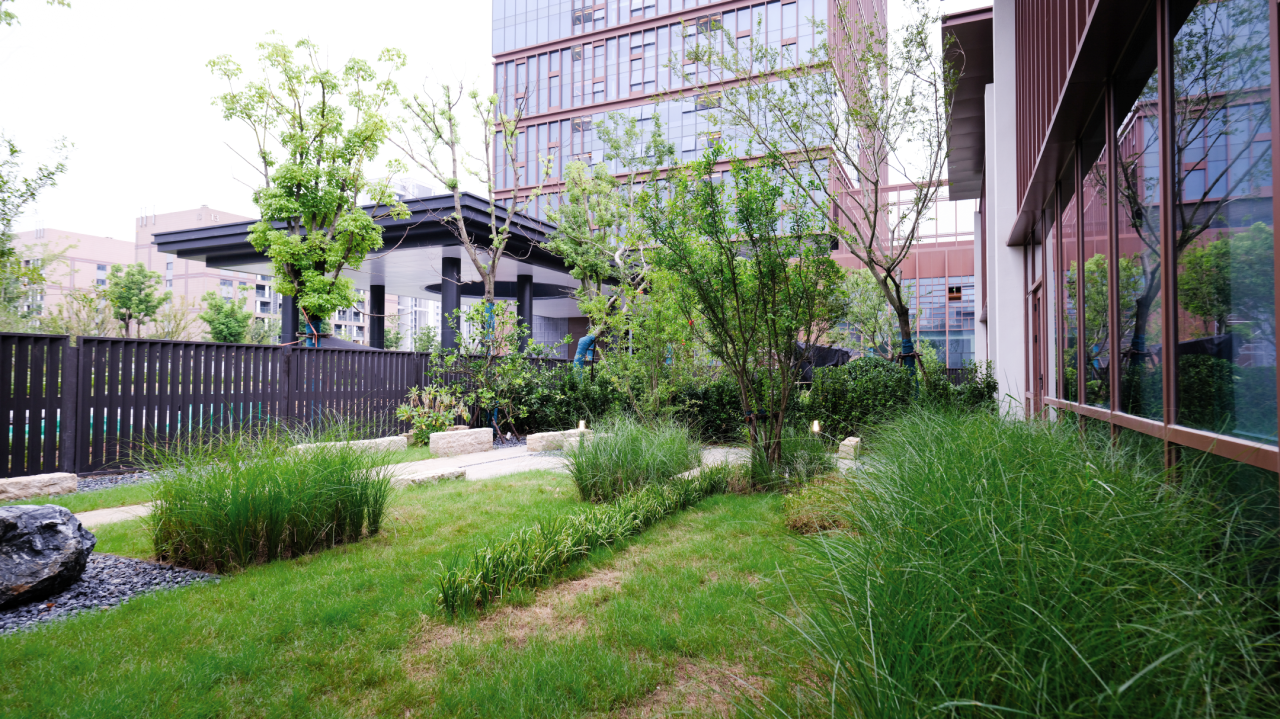
▲私密庭院(庭院深深)
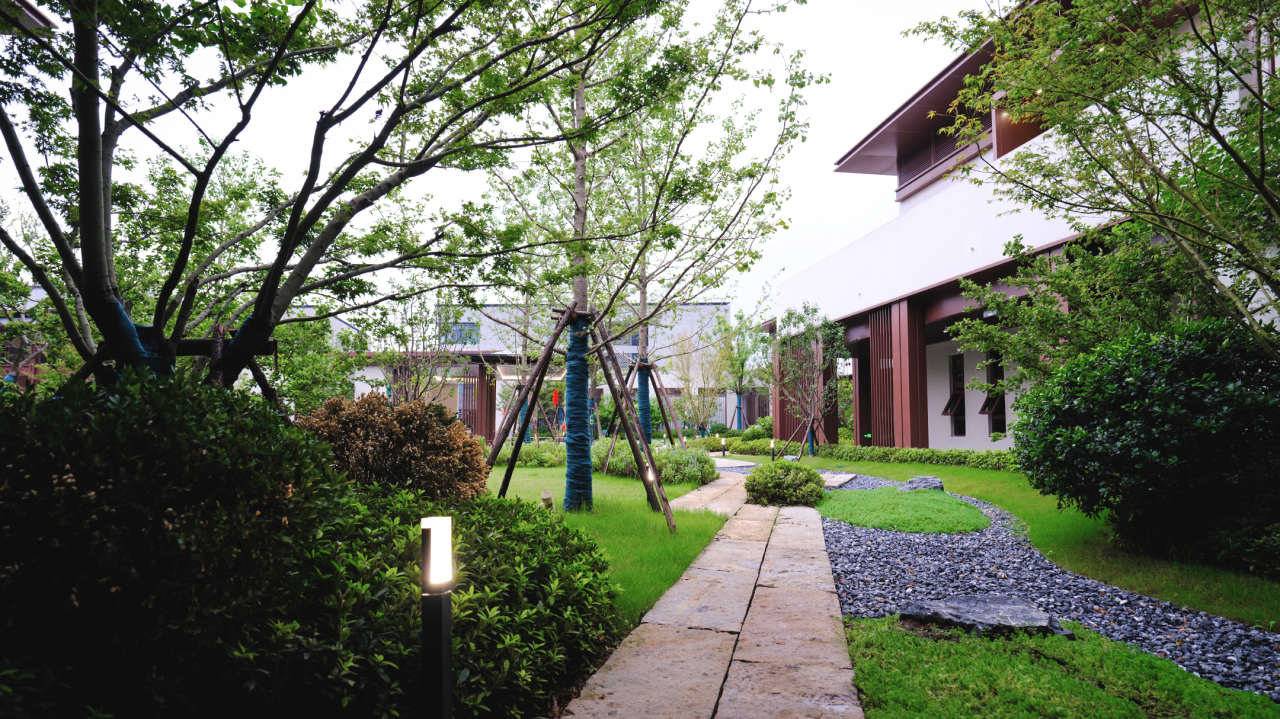
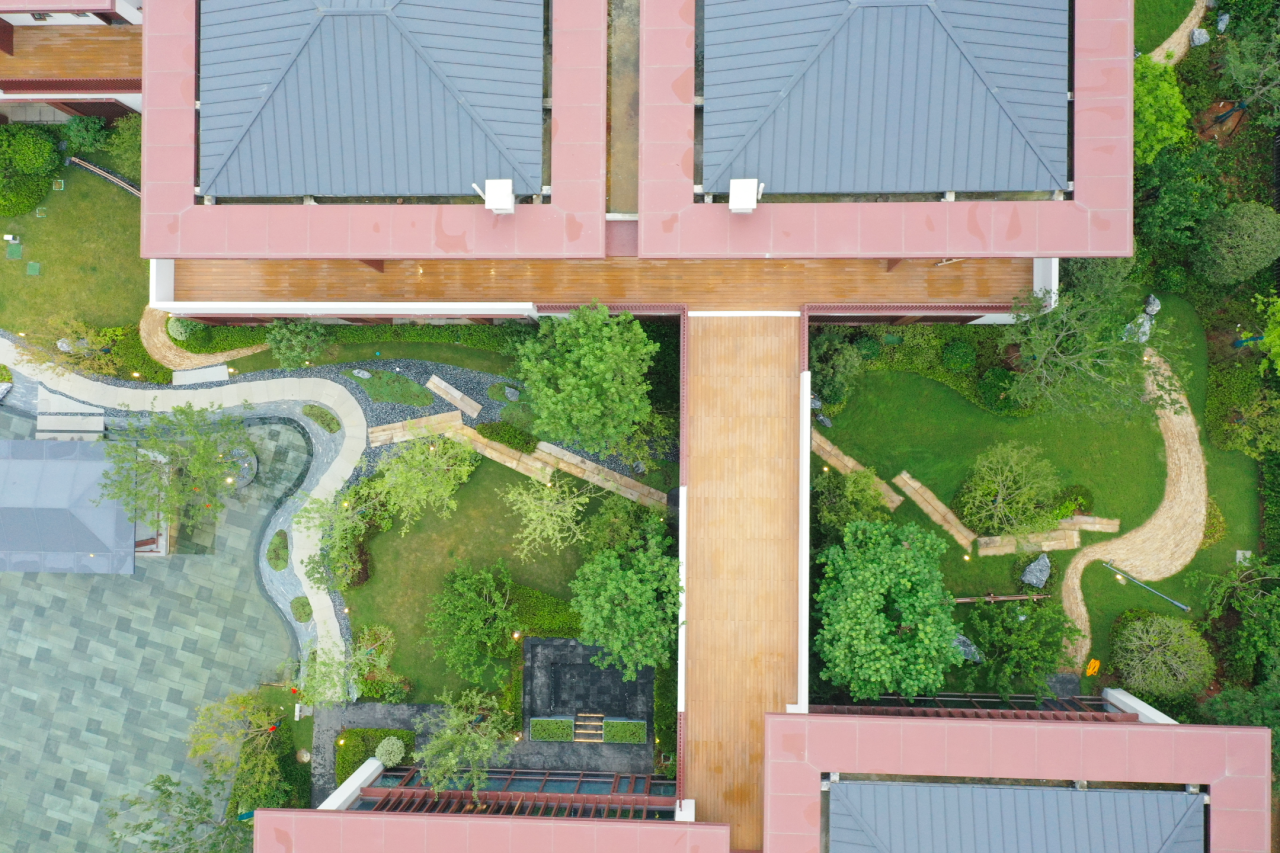
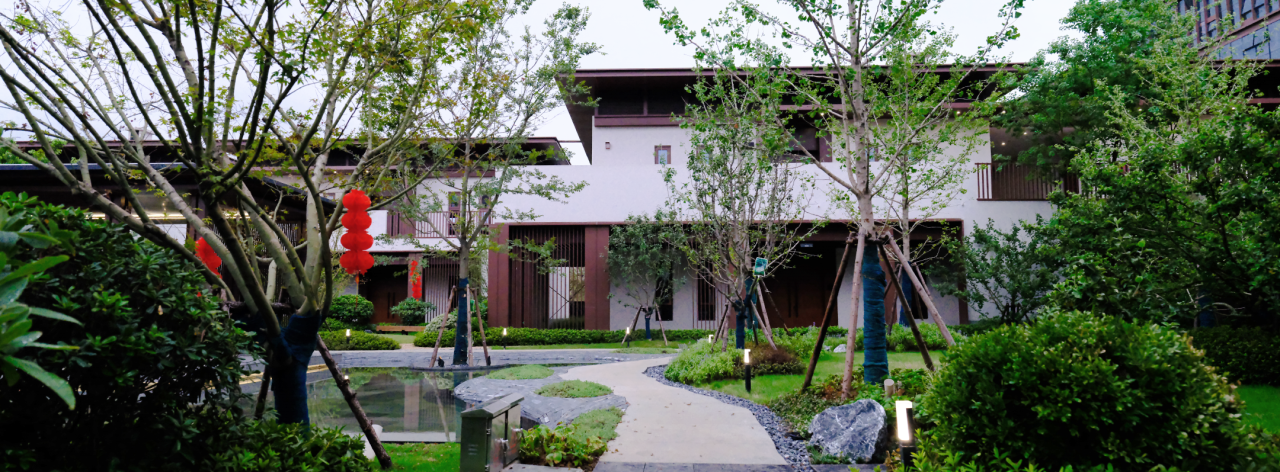
采用流畅的曲线布局,延续了中式园林 “曲径通幽” 的营造逻辑,避免了直线的生硬感,引导人流在草坪、置石与植被间游走,实现 “步移景异” 的探索感,同时串联起建筑入口、草坪活动区与置石景观节点,让分散的庭院元素形成有机整体。
The fluid, curved layout echoes the "winding paths to seclusion" ethos of traditional Chinese gardens, avoiding the harshness of straight lines.
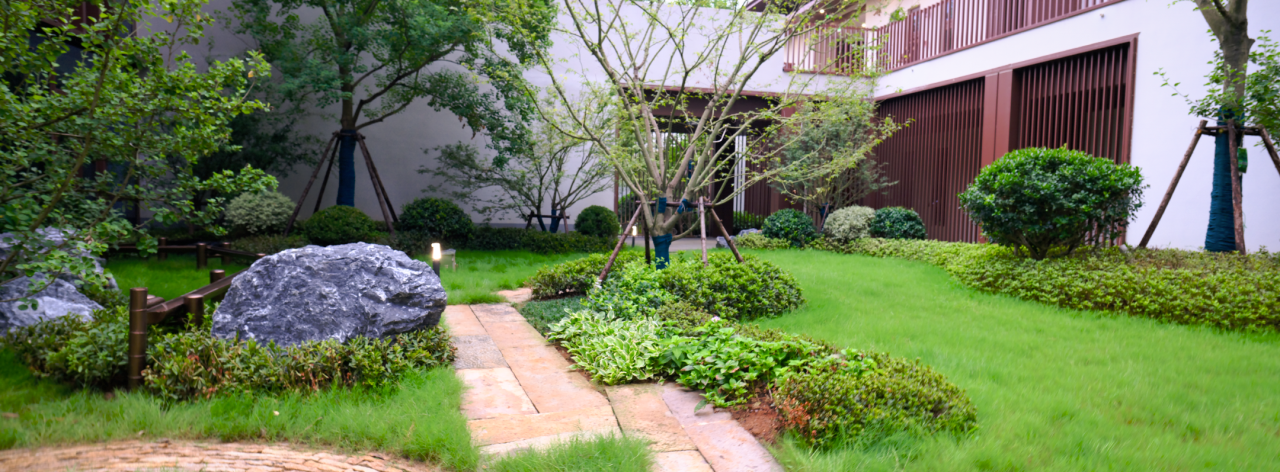
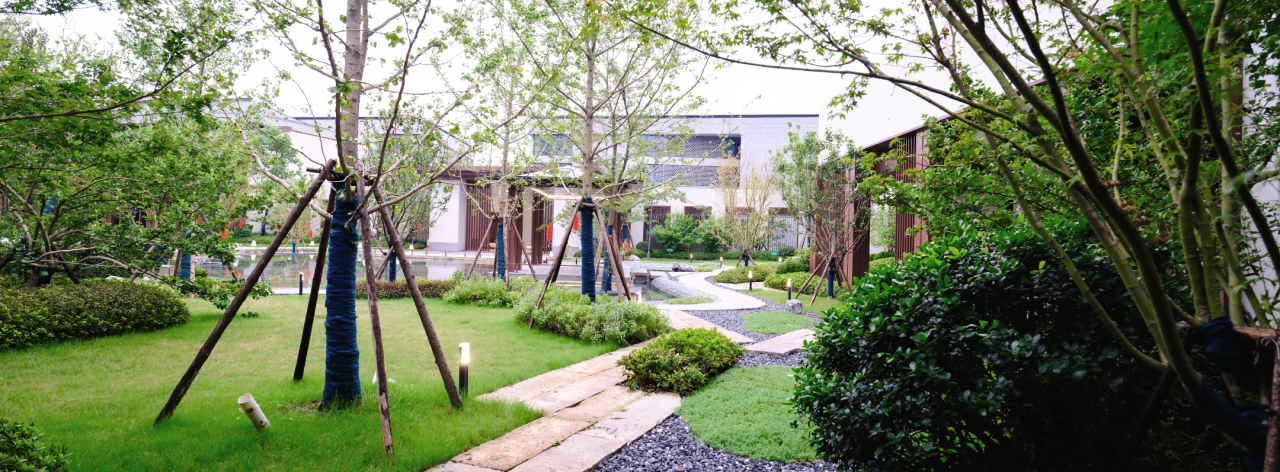
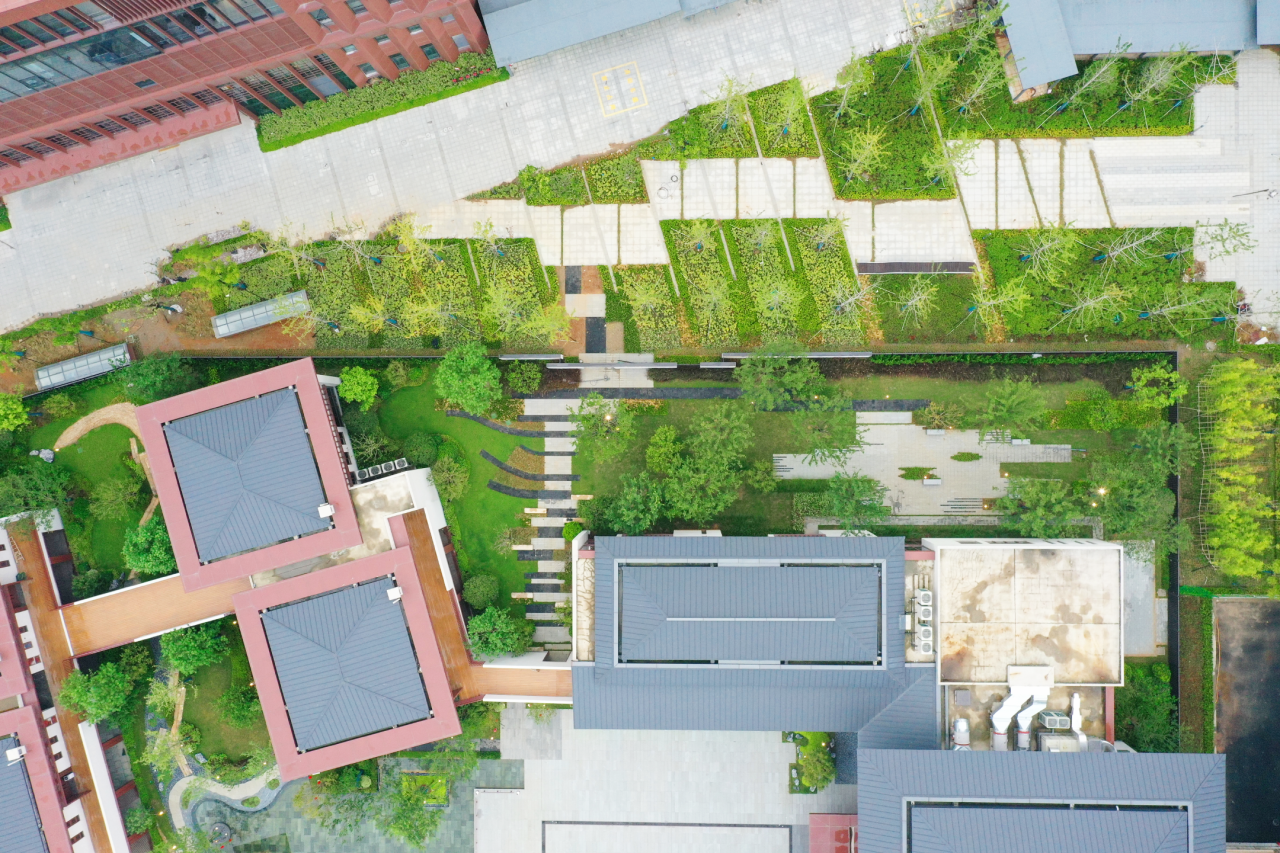
▲后侧庭院
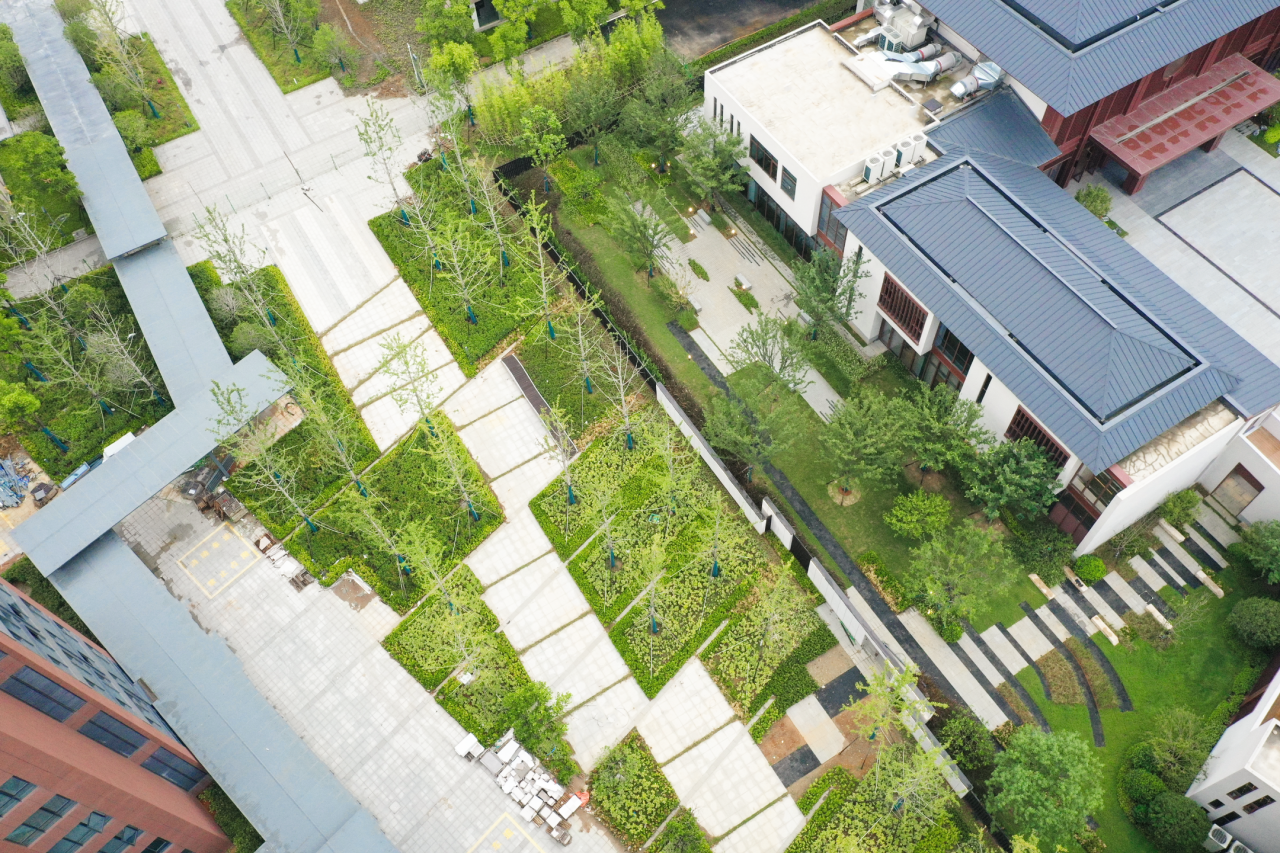
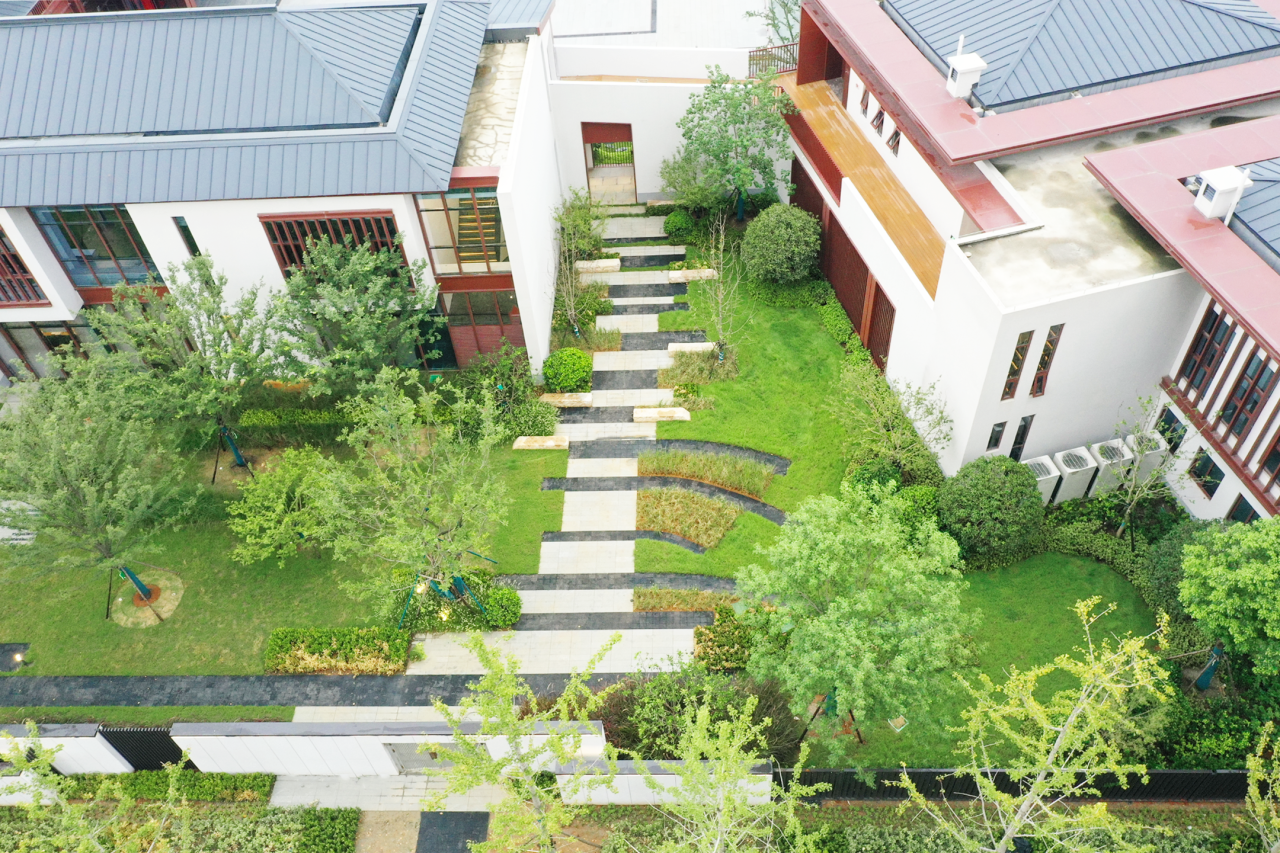
▲线性铺装
后侧庭院以一道黑白灰石材拼接的线性步道为核心,高效串联起建筑、草坪与植被区。笔直的布局保障通行,局部点缀汀步与绿植,形成节奏变化。
The linear stone walkway in the back courtyard links buildings, lawns and greenery, creating a visual corridor that echoes modern Chinese design.
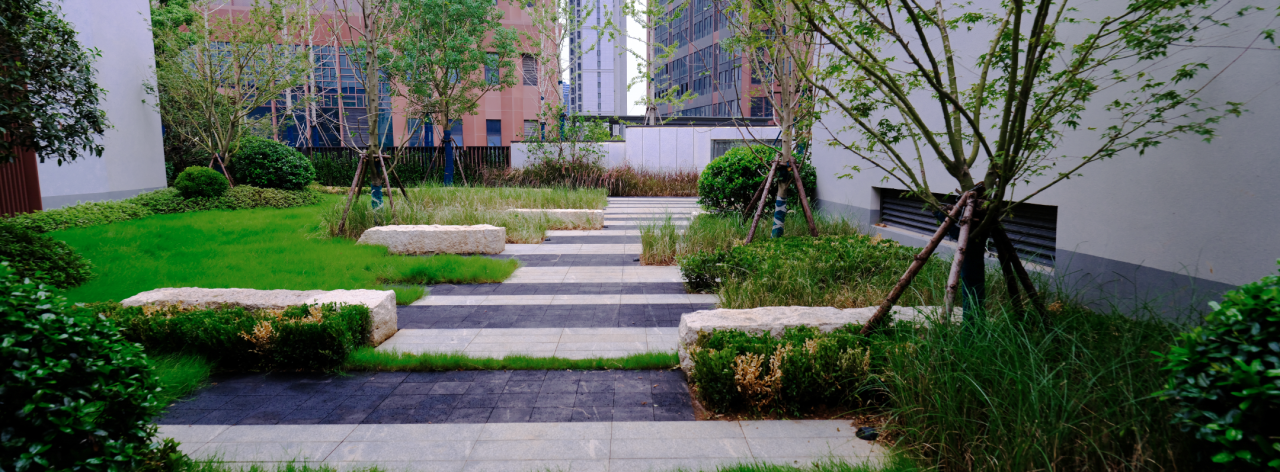
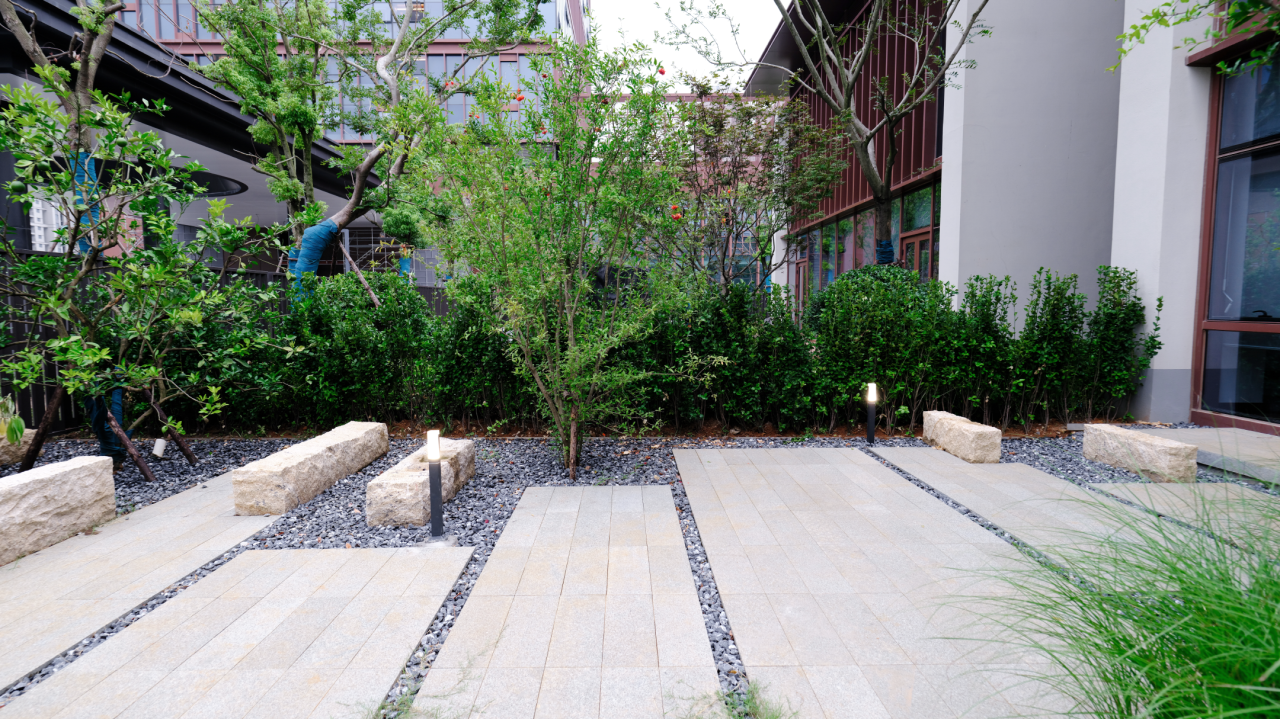
多种铺装的组合运用,是这个庭院景观设计的点睛之笔,它不仅通过材质、色彩与纹理的变化划分空间功能,更以细腻的衔接手法营造出富有层次的东方禅意氛围。
项目名称
宁波前湾新区杭湾-方太书院
业主
方太集团
项目地点
浙江宁波
项目规模
㎡
项目类型
设计时间
2023